

Sod Installation · Ottawa
Sod installation in Ottawa
Korvex Construction lays new sod across Ottawa, Kanata, Stittsville, Barrhaven, Nepean, Orleans, Manotick and Riverside South. We strip the old lawn and weeds, correct the grade so the ground falls away from the house, level the topsoil and lay the sod, and we restore lawns after drainage, deck or fence work. The site visit is free, and the written price follows it.
- Sod
- Topsoil
- Graded subsoil
A new lawn in section, from the sod down to the graded ground under it.
- New sodLaid with tight, staggered seams and rolled so the roots touch the soil.Seams tight and staggered
- TopsoilSpread over the graded ground and raked level, firm underfoot.Raked level
- Graded subsoilOld lawn stripped off; the ground shaped to fall away from the house toward where the lot drains.Falls away from the house
What goes wrong
Why new sod fails on Ottawa lots
New sod fails from underneath. Rolls laid over old grass and weeds, over a thin skim of topsoil on hard clay, or over ground that slopes toward the house root poorly. The seams dry out and open, low spots hold water, and the lawn settles into dips that show every time you mow. A lawn that stays soggy beside the foundation each spring was usually graded wrong before the sod went down.
The City of Ottawa wants every lot sloped away from the home, so surface water soaks into the ground or flows to the property line. Owners are responsible for keeping the grades set by the lot’s original grading plan, and the City asks anyone hiring a contractor for yard work to make sure the work respects that drainage design. Swales stay open, catch basins stay uncovered, and water that has not soaked away 48 hours after rain is worth a call to 3-1-1.
Clay makes the grade matter more. Leda clay underlies most of Ottawa and drains slowly, so water that sits on a flat or back-sloped lawn stays near the surface. Fresh topsoil spread over a bad slope only hides it for a season: the shape of the ground below sets where the water goes.
A Korvex sod job therefore starts below the grass. The old lawn and weeds come off, the subsoil is shaped to fall away from the house and toward where the lot drains, topsoil is spread and raked level over it, and the sod is laid with tight, staggered seams and rolled so it touches the soil everywhere. You get clear watering guidance when the last roll is down.
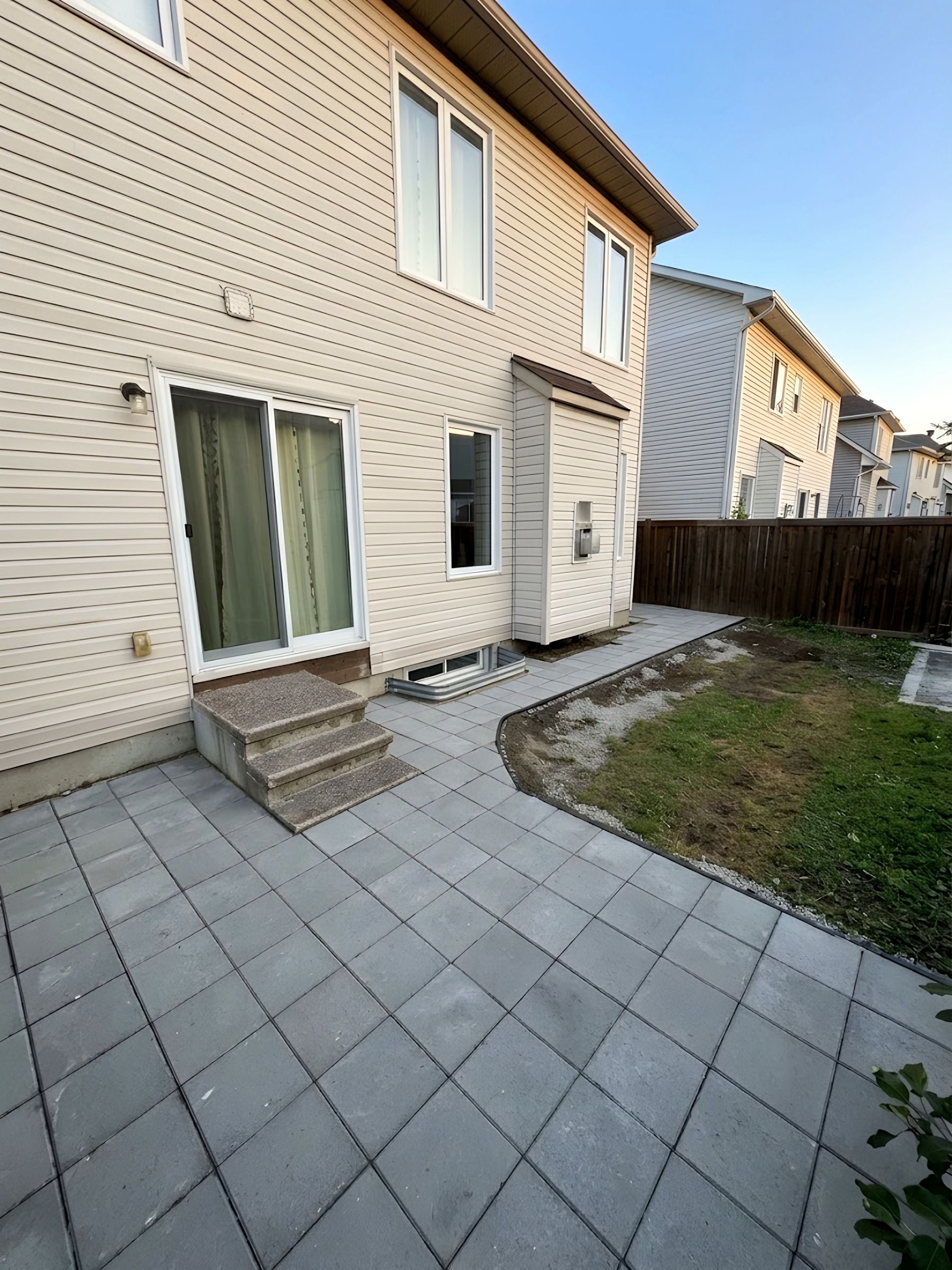
Much of our sod work follows other work. A French drain trenched across a lawn, a fence line torn out, a deck footing dug or a strip along the foundation regraded all leave ground that needs to be put back. On one Korvex job, a French drain was trenched across the lawn before a walkway and patio went in, and the soil and edges along the lawn were restored at the end.
How we build it
What goes under new sod
A lawn is only as flat and as dry as the ground under it. Most of a sod job happens before the first roll arrives: the old lawn off, the grade set, the topsoil levelled. A shortcut on any of the three shows up in the first summer, as seams that open and patches that stay wet.
- Strip, then grade
The old lawn comes off before anything is shaped, so the grade is read on the real ground.
- Follow the grading plan
The slope away from the house is set within the lot’s original grading, with swales kept open and catch basins clear.
- Slope below, topsoil above
The fall is cut into the subsoil. Topsoil then follows it at an even thickness, so the lawn keeps the same fall.
- Downspouts planned in
Downspouts are pointed onto the lawn well away from the foundation, so roof water spreads over grass and leaves the new seams in place.
- Tight seams, clean cuts
Seams are butted and staggered, and edges are cut cleanly at beds, walkways and the driveway, where gaps dry out first.
- Watering handed over
You get watering guidance for the new lawn before we leave, because what happens next decides whether the sod roots.
What we build
Sod installation: the work we take on
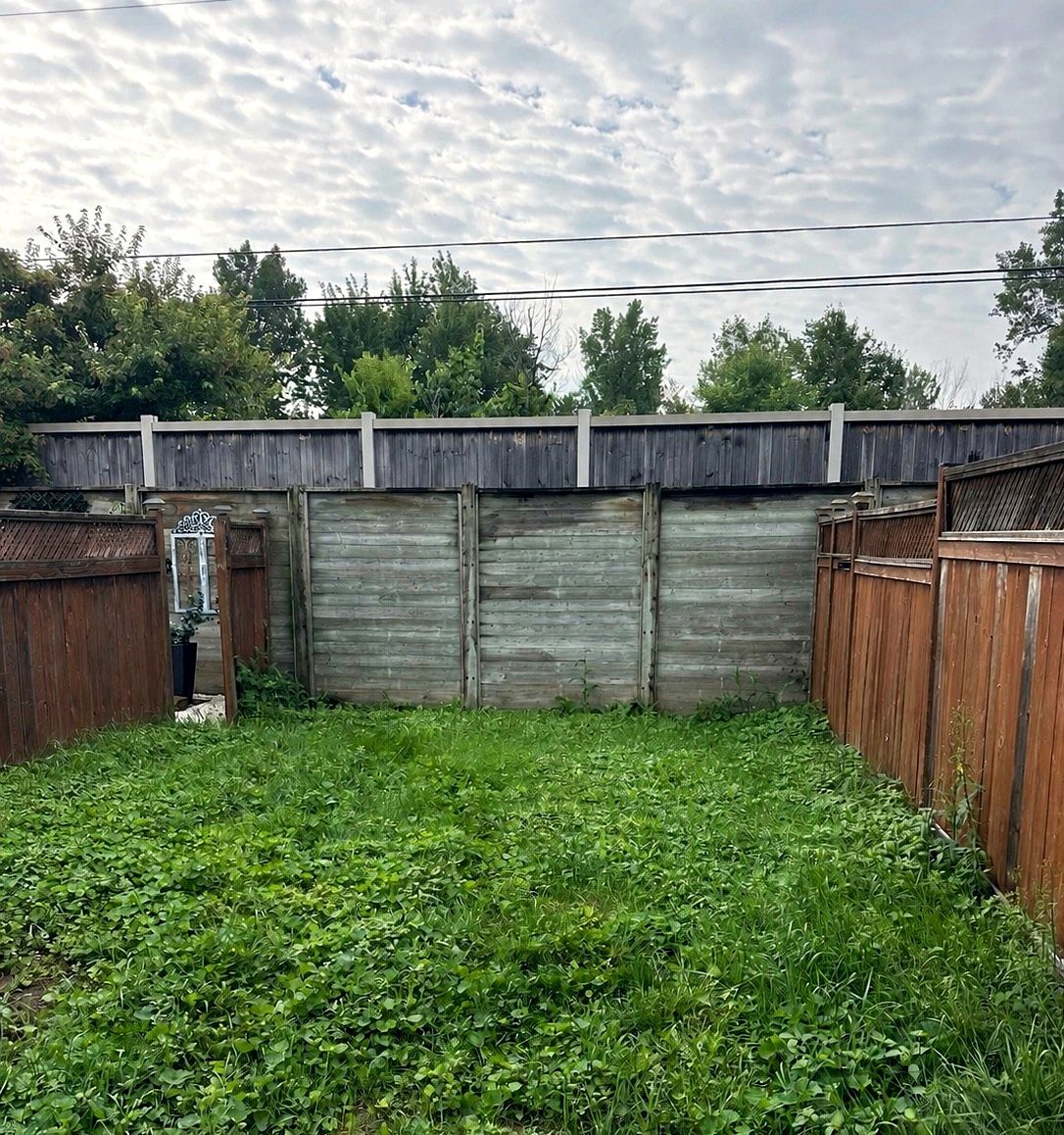
Old lawn and weeds removed
Tired grass, weeds and thatch stripped off down to soil, and roots and stones raked out, so the new sod sits on clean soil it can root into.
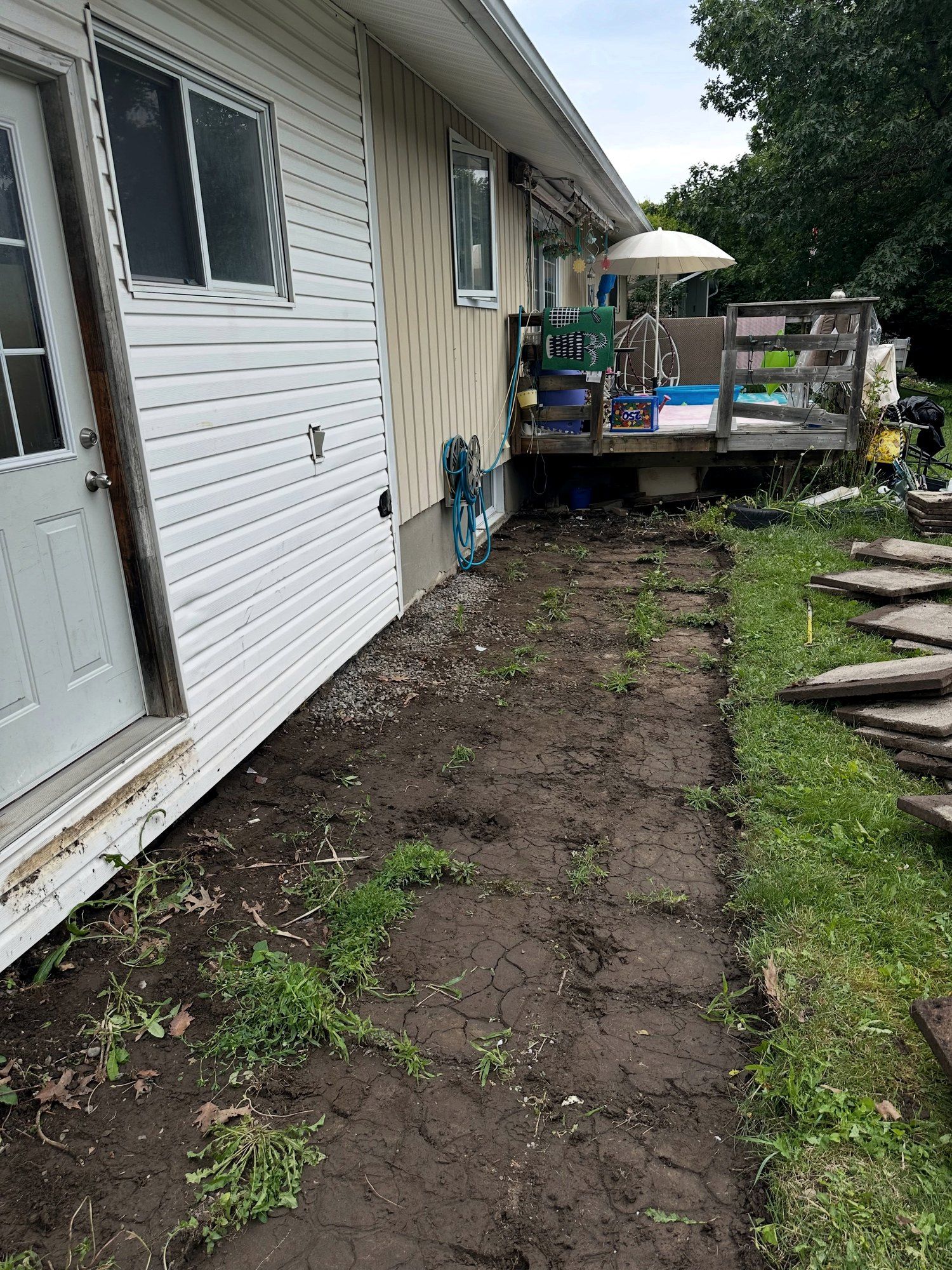
Grade corrected away from the house
High spots cut, low spots filled and the ground shaped to fall away from the foundation, within the slopes of the lot’s original grading plan, before any topsoil goes on.
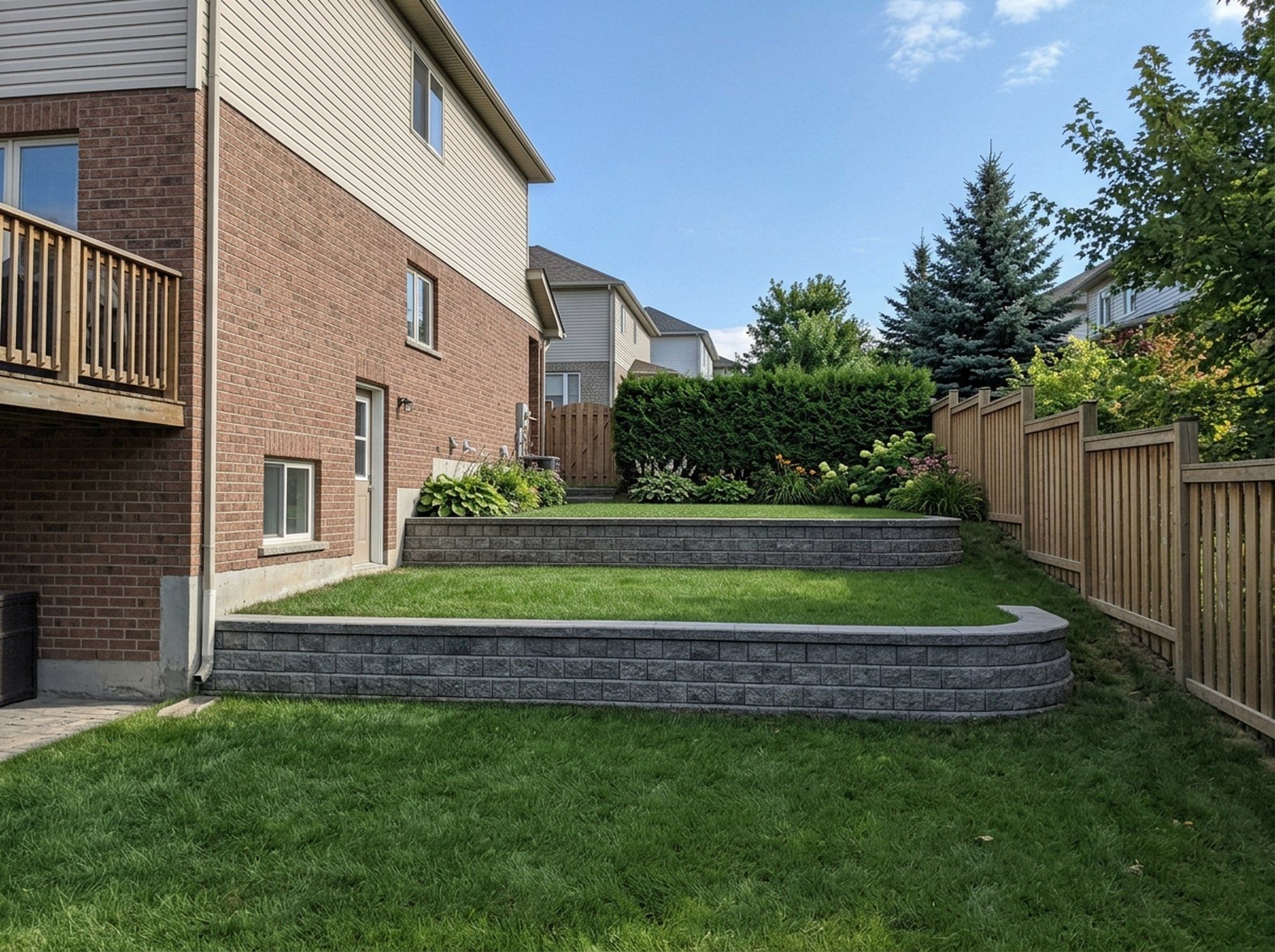
Topsoil levelled
Topsoil spread over the graded ground and raked level, so the finished lawn follows the slope underneath without bumps or hollows, and firmed so a footstep leaves only a shallow print.
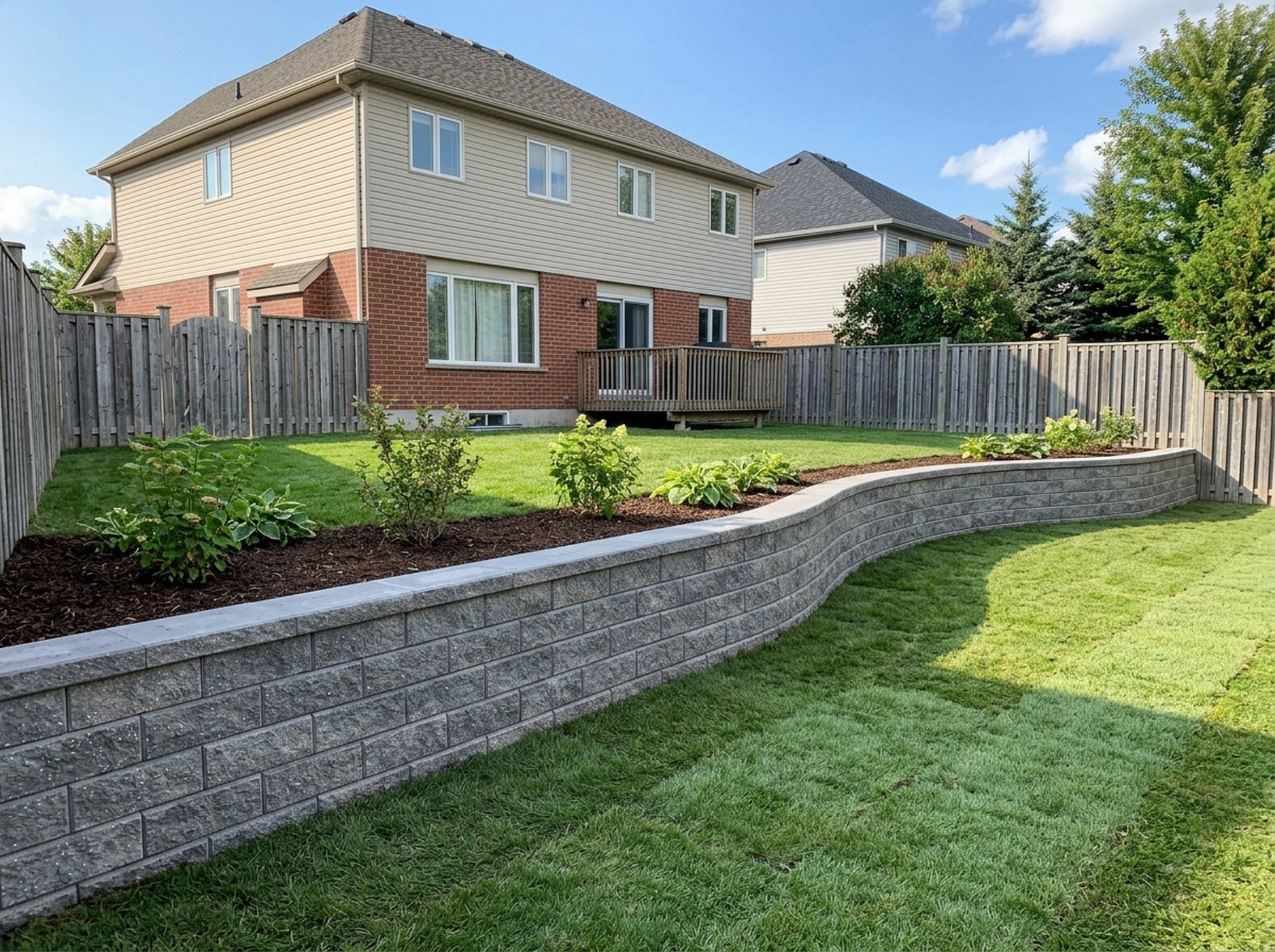
Sod laid and rolled
Rolls laid in a brick pattern with the seams pushed tight and staggered, cut cleanly around beds, trees and edges, then rolled so the roots touch the soil across the whole lawn.
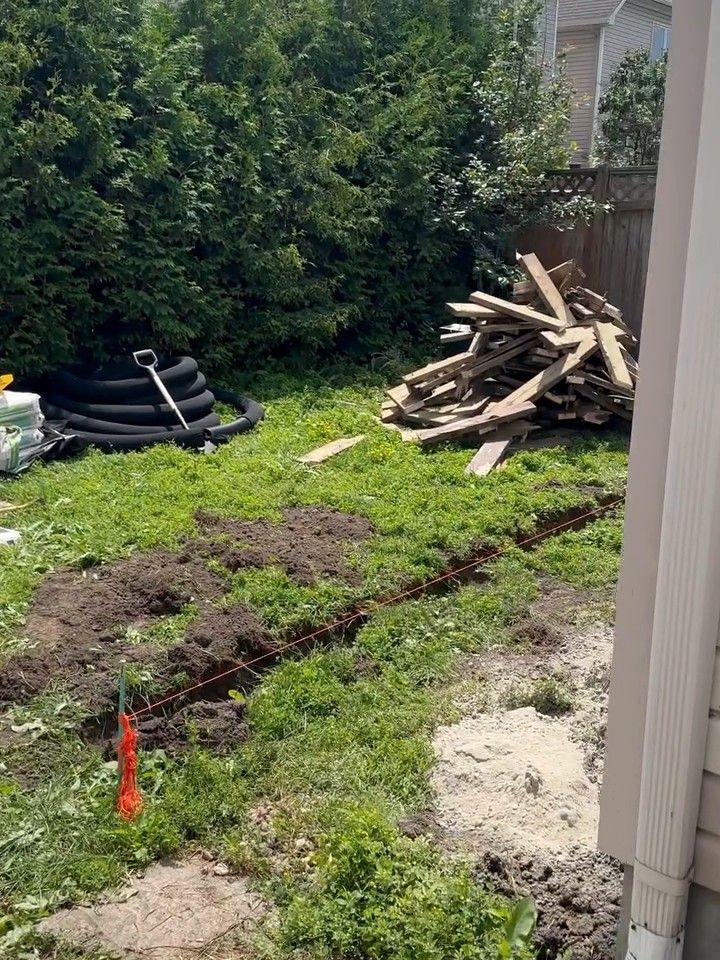
Lawn restored after drainage work
Trenches from a French drain or a downspout line backfilled and settled, the grade restored over them and the lawn sodded again, so the drain line disappears under the grass.
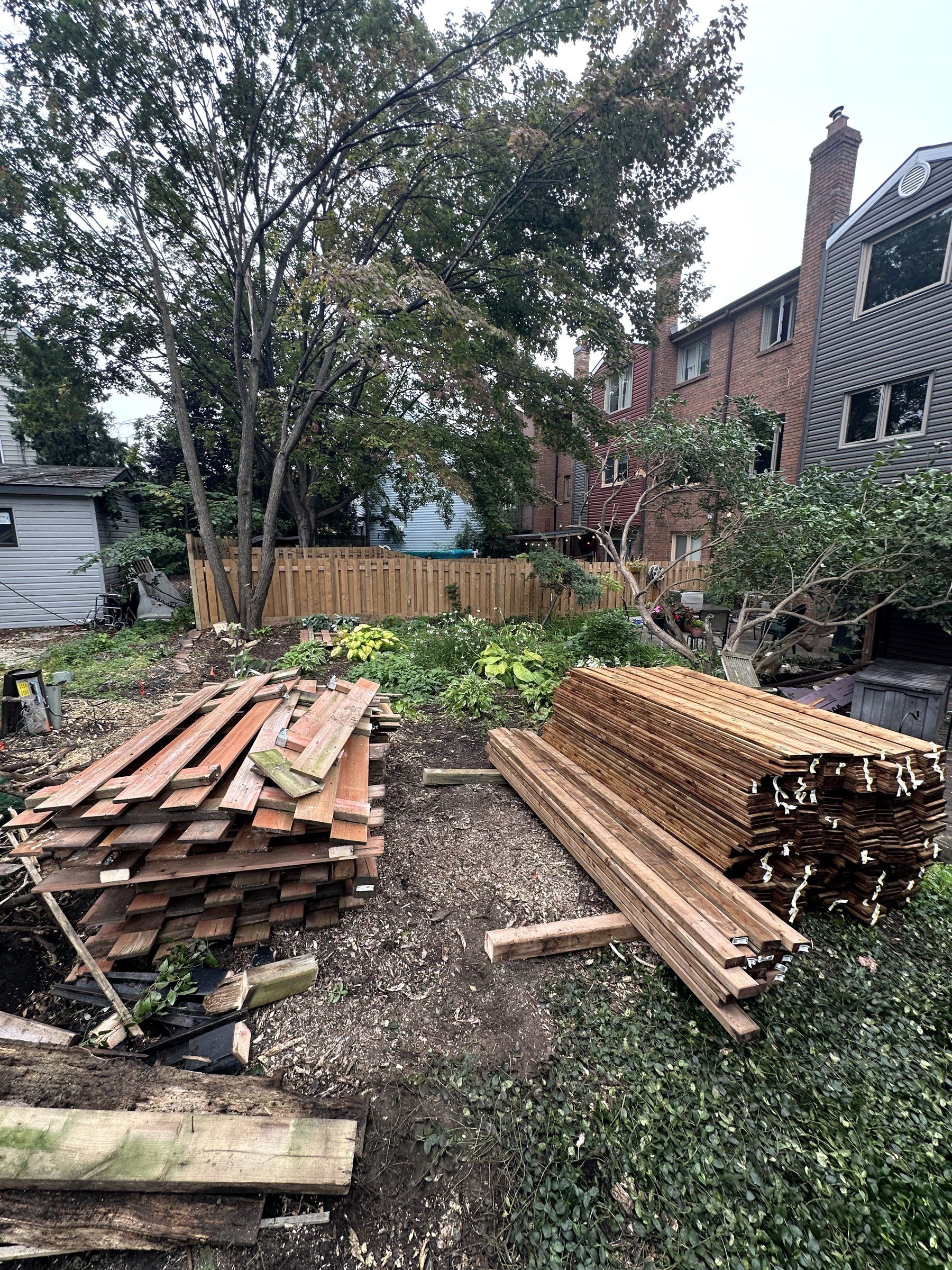
Lawn restored after fence or deck work
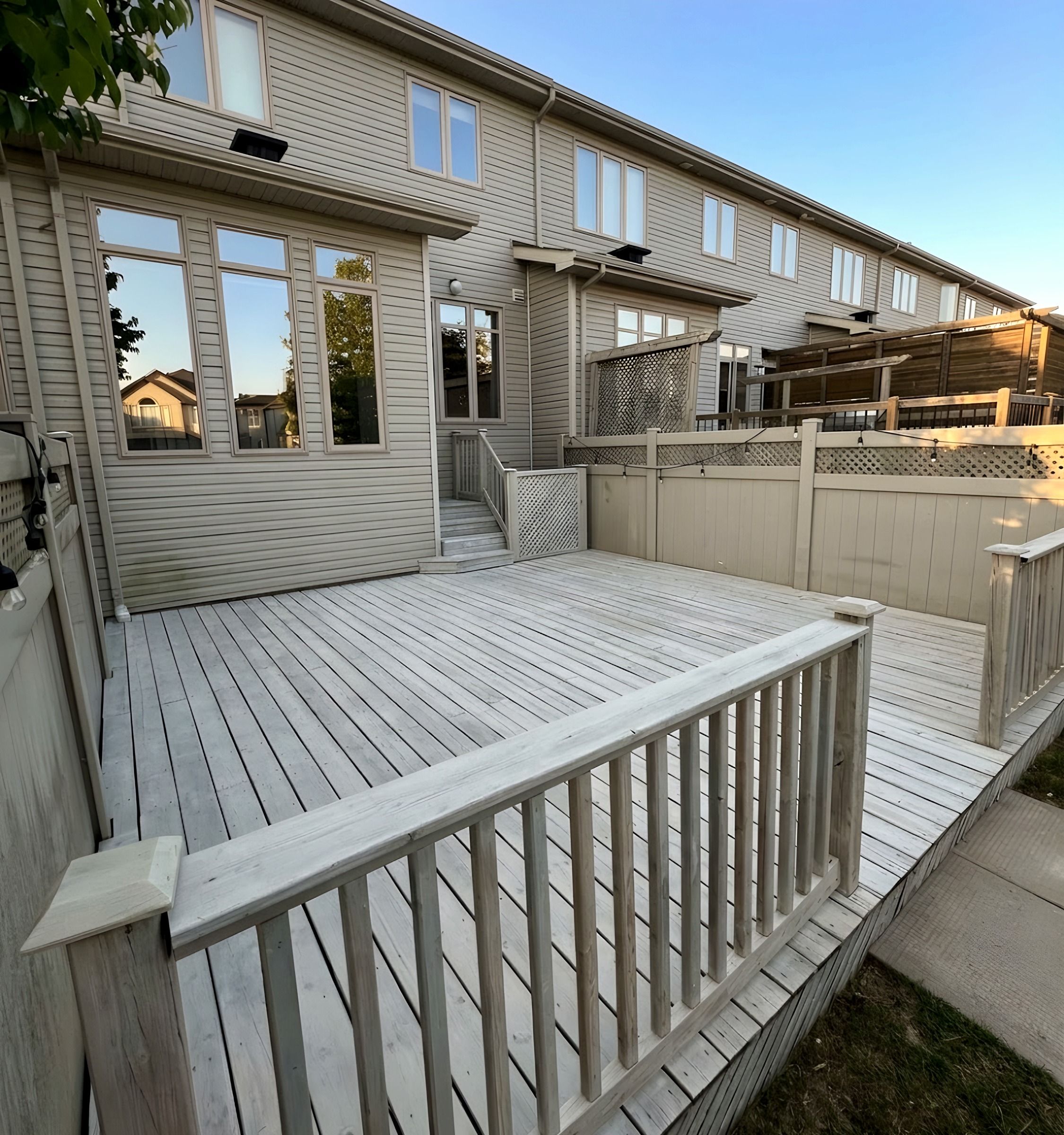
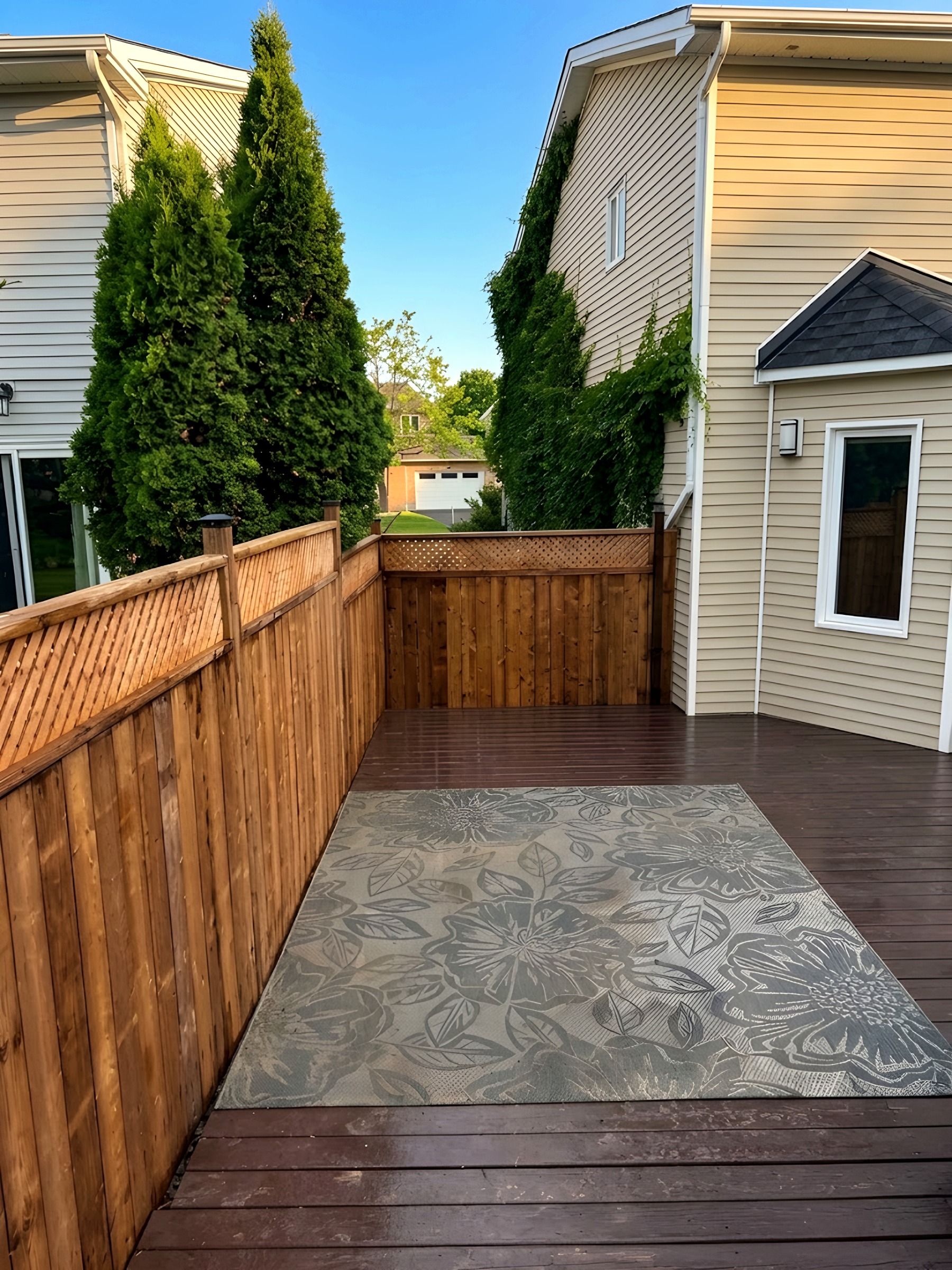
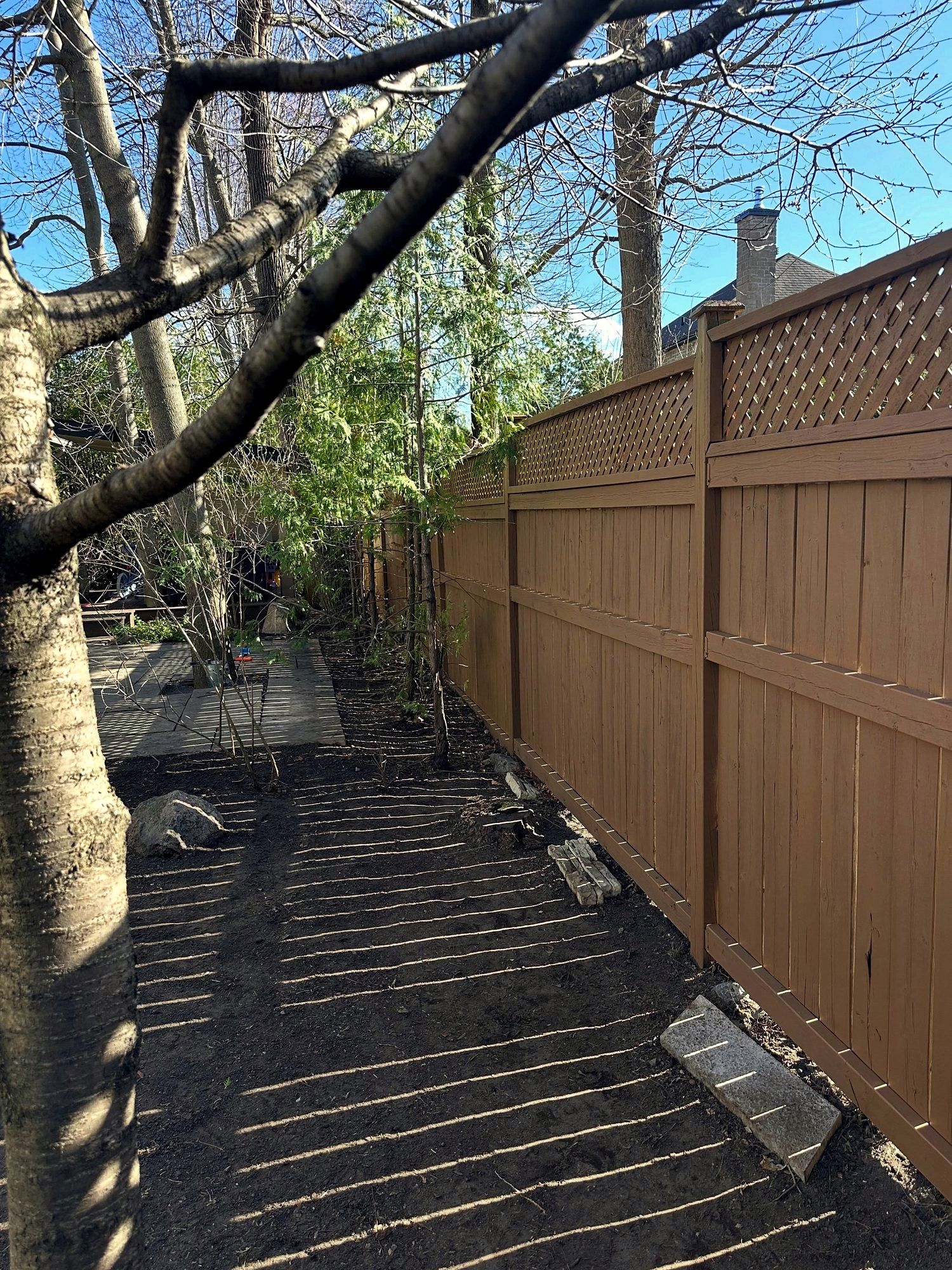
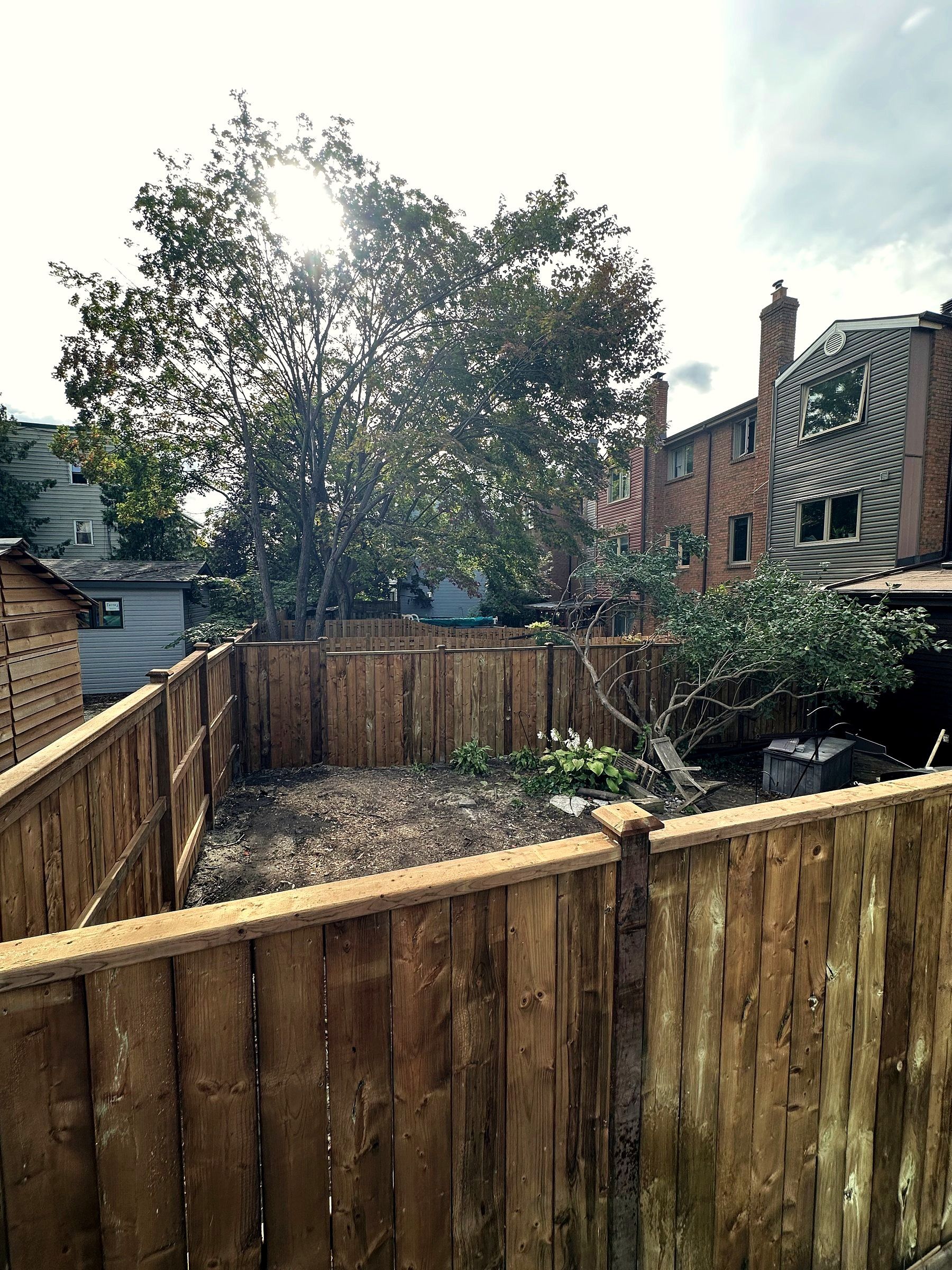
Ground torn up along a new fence line, around deck footings or where old structures came out cleaned of debris, regraded and sodded, with the lawn brought up to the new posts and steps.
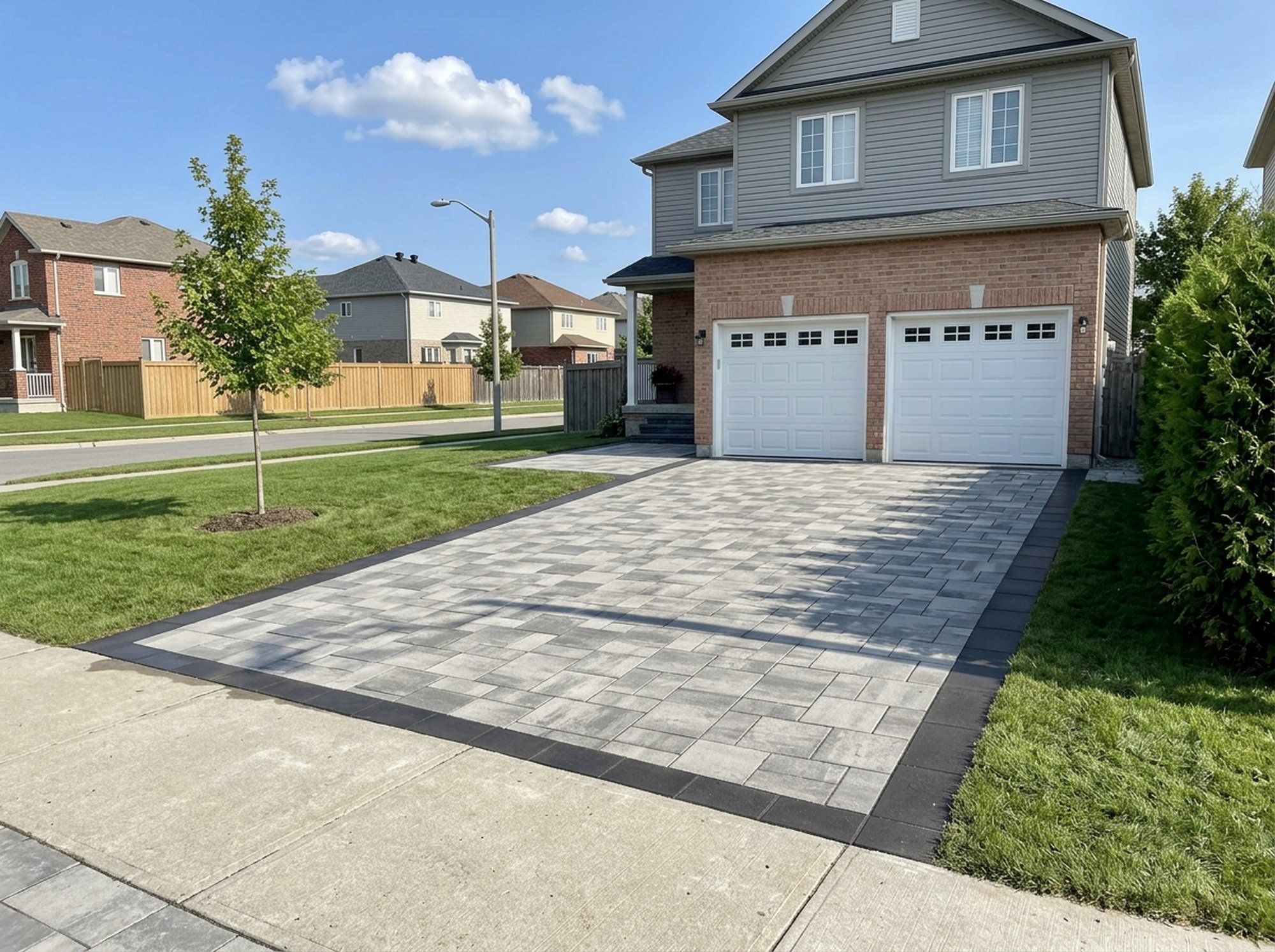
Front lawns and edges
Front lawns along driveways, walkways and beds, finished flush with the paving edges so water runs off the hard surface onto the grass and the mower rides cleanly over the joint.
Related projects
Often part of the same job
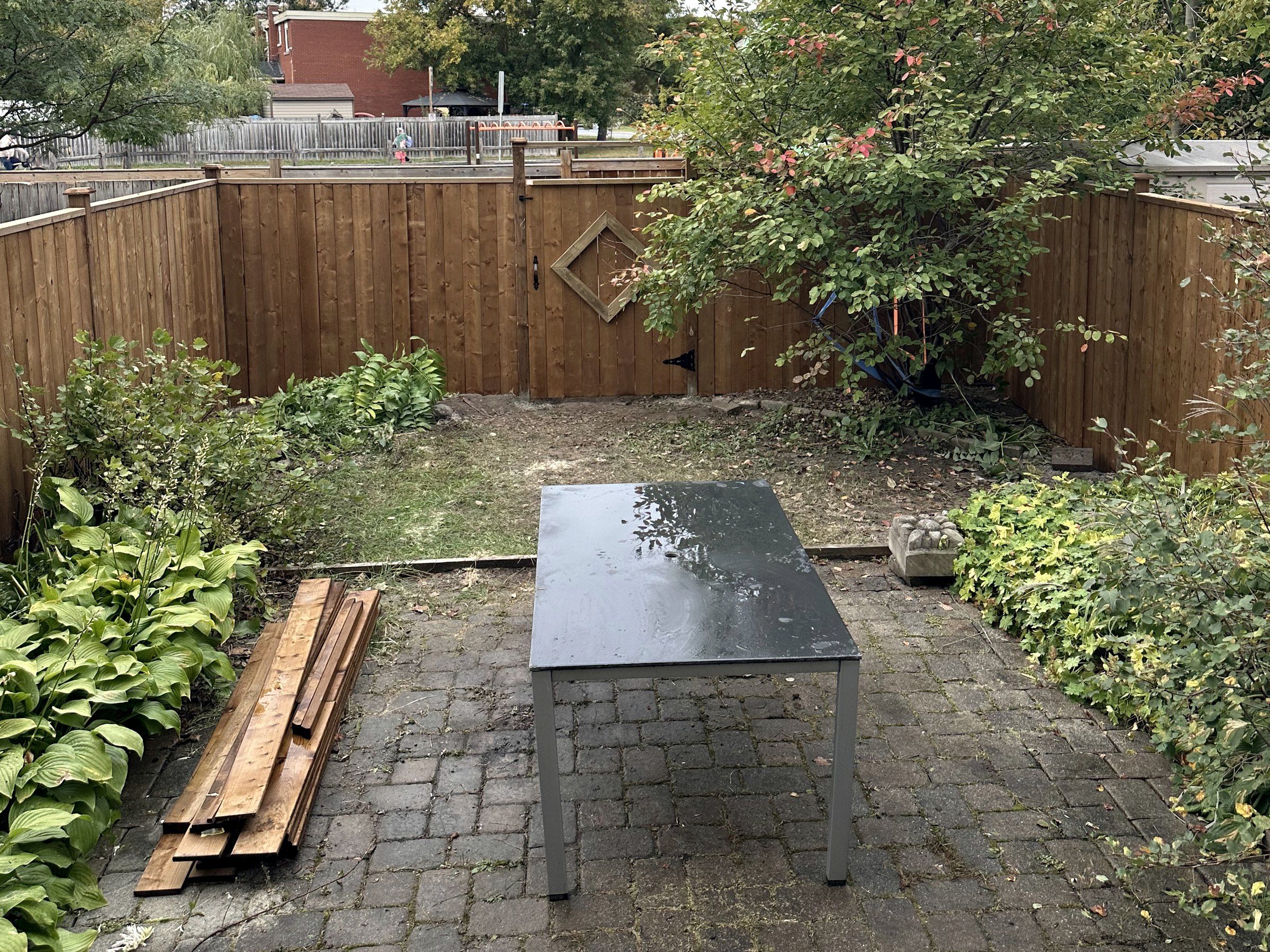
“Vlad and his crew installed my patio in 2 days. Did excellent work and vlad answered any and all questions I asked. I highly recommend Korvex Development for any job you may require.”
Joe Ayoub · Patio installed
“Did awesome work! had them repair a leany fence and they were on time, cheap and super professional”

Josh Cohen-Collier · Leaning fence repaired
Related services
Often built together
FAQ
What homeowners ask about sod installation
Can new sod go straight over my old lawn?
Laid over old grass and weeds, sod roots poorly: the old mat keeps the new roots from reaching soil, and weeds push up through the seams. Uneven old turf also shows through as bumps. The old lawn is stripped first, the grade is checked and corrected, and topsoil is levelled before the new sod goes down.
Why does my lawn stay wet near the house?
Usually because the ground there slopes toward the foundation, or a downspout empties onto it. City of Ottawa guidance says a lot should slope away from the home, and downspouts should discharge onto grass at least four feet from the foundation, never onto a neighbour’s property or the sidewalk. New sod over the same slope stays wet, so the grade is corrected first. If water still sits after 48 hours, the City asks owners to call 3-1-1.
Am I allowed to change the grade when the lawn is redone?
Within limits. Ottawa owners are responsible for keeping the grades set by the lot’s original grading plan, swales cannot be filled or blocked, and catch basins must never be covered. Any change that harms the lot’s intended drainage breaks the site alteration by-law. If a grading plan exists, the City provides it through an Access to Building Permit Records request. Korvex shapes the ground within those limits so water moves away from your house.
How should new sod be watered?
Often at first and deeply later. Until the roots take hold, the sod and the soil right under it should stay moist, so new sod is watered soon after it is laid and then regularly, early in the day. As it roots, watering becomes less frequent and deeper. Lift a corner now and then: when it no longer comes up easily, the roots have reached the soil. Keep heavy traffic off it until then. You get guidance for your lawn when the job is done.
When can sod be installed in Ottawa?
Sod goes down on unfrozen ground, so on most Ottawa sites it is a spring-to-fall job. Cool spring and early-fall weather is easiest on new sod; in midsummer heat it needs more water to root, and sod laid late in the fall has less time to root before the ground freezes. Grading waits for soil dry enough to shape, so a wet spell can move the start. The schedule comes with the written quote.
Can you restore my lawn after drainage, deck or fence work?
Yes. Trenches, footing holes and ruts are filled and settled, the grade is restored so the yard still sheds water away from the house, topsoil is levelled and the lawn is sodded. When Korvex does the drainage, fence or deck itself, putting the lawn back is planned into the same job, so the yard is left finished.
Do buried lines need to be located before regrading?
When the grade is cut or a drain line goes in, yes. Whoever digs requests locates through Ontario Dig Authority (formerly Ontario One Call), at least five business days ahead, and the service is free. Private lines, such as power to a shed or a gas line to a barbecue, are the owner’s to have marked. Tell us about them at the estimate.
How is sod installation priced?
By the lawn area, how much old turf has to come off, how much grading and topsoil the ground needs, and how easily equipment and pallets reach the yard. Korvex Construction looks at the lawn in person anywhere in Ottawa and the suburbs, and the written price follows that visit, with the grading listed separately from the sod.

Book a free sod estimate
Tell us what you want built and send a few photos. We come out, look at what sits under the job, and give you the scope and the price in writing.