

Interlock Repair · Ottawa
Interlock repair in Ottawa
Korvex Construction repairs sunken, heaved and rocking interlock across Ottawa: patios, walkways and front landings. We lift the pavers, rebuild the base that moved, and relay them on a slope away from the house. Book a free on-site estimate and you get a written price.
- Pavers
- Concrete slabs
- Bedding sand
- Compacted base
- Filter fabric
What goes wrong
What a dip in your patio is telling you
A sunken patch of interlock is the surface showing you where the ground underneath gave way. The paver itself is rarely the problem. Under it, the base was too thin, was laid on topsoil, or was never compacted, so it keeps settling. Water collects in the low spot, soaks into the base, and each winter it freezes and pushes the pavers a little further out of line.
The usual places are easy to predict: beside a downspout, along the foundation where the ground was backfilled after the house went up, at the edge of a patio with nothing holding it, and on a walkway where a trench was once dug and filled. Heaved pavers near the house are the same problem in reverse, with water trapped below them lifting them in the cold.
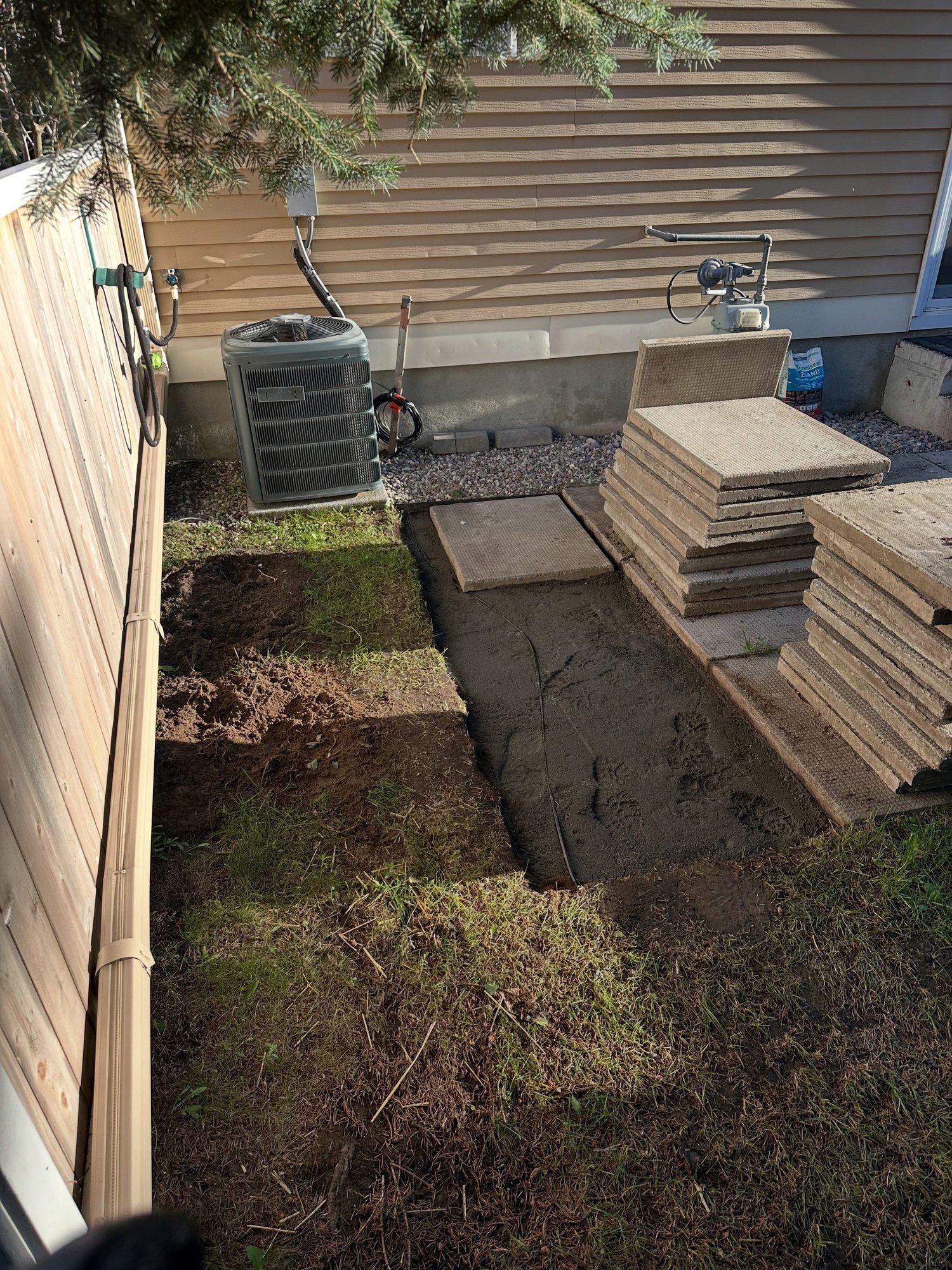
A lasting repair goes down to the cause. We lift the pavers in and around the low area, dig out the soft or contaminated base, lay fabric where the soil needs it, and rebuild the base in compacted layers. The bedding is screeded flat and the pavers go back on a slope that sends water away from the house.
Some signs are worth catching early. Water that stands on the patio a day after rain, pavers that rock when you step on them, joints that open wider each spring and a lip at the edge of a dip that catches a shovel or a toe all mean the base is moving underneath. Caught while the area is small, the repair stays small.
What you get back is the patio you already had, flat again and draining after rain, usually in the same stone. Where a few pavers are cracked, we tell you at the estimate how many new ones would be needed to fill in.
How we build it
How a sunken area is repaired
The repair rebuilds what failed under the pavers, so the area stays at the same level as the paving around it. Most of the work happens below the surface, in the same order as a new patio: dig out, fabric, base in compacted layers, bedding, then the stone.
- Find the edge of the problem
The lift goes past the visible dip, until the pavers come up flat and the base under them is firm.
- Find the water
A downspout, a low spot or a slope toward the house is fixed with the repair, or the dip comes back.
- Rebuild, then compact
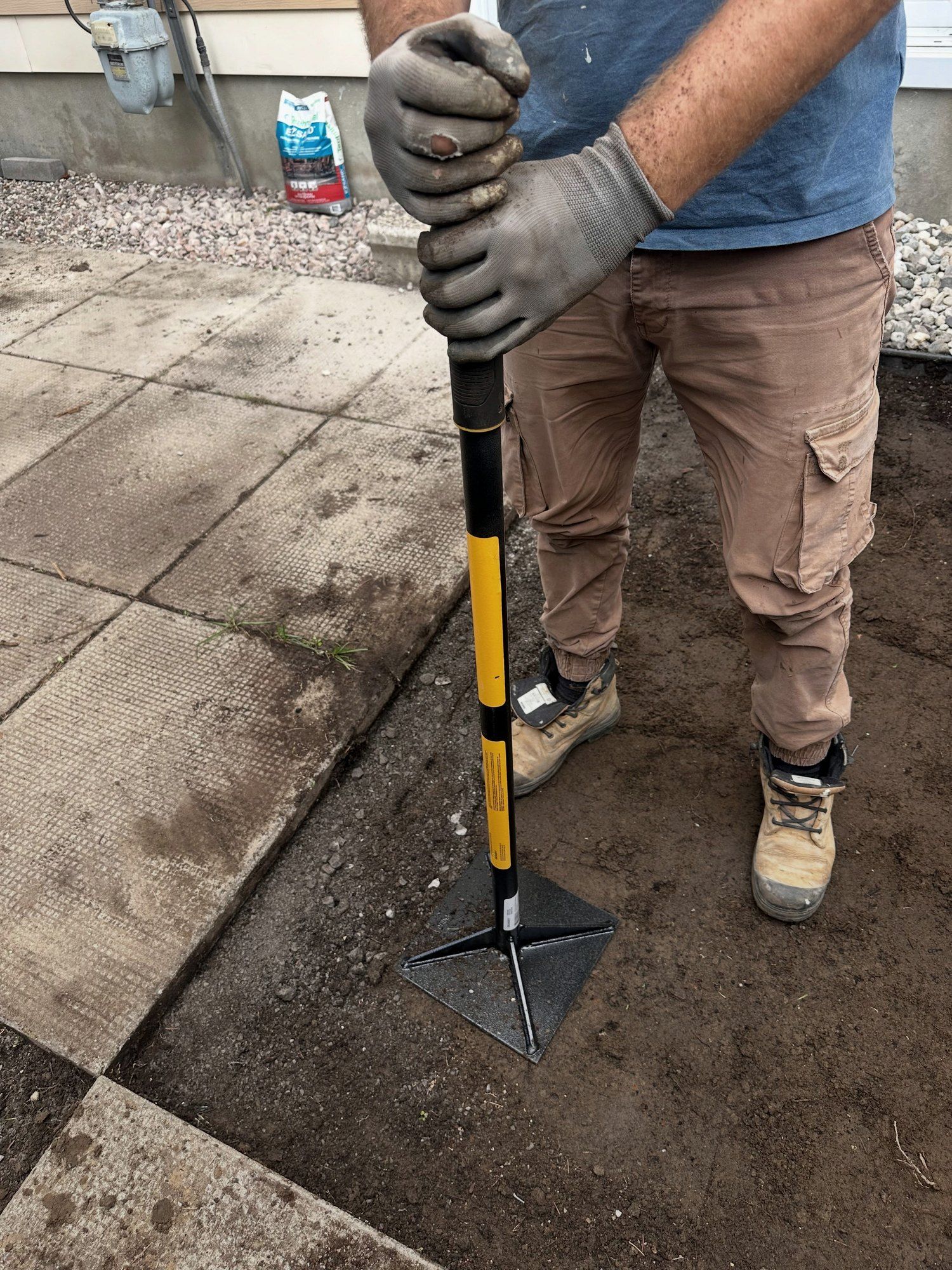
The new base goes in in layers, each compacted before the next. A loose base is the main reason pavers sink.
- Match the levels
The relaid area is set to the paving around it and to a fall away from the house.
- Close the edge
An open edge lets pavers creep outward, so it is held in place before the joints are filled.
- Your pavers, relaidSound pavers go back in their pattern; cracked ones are replaced.Set on the bedding
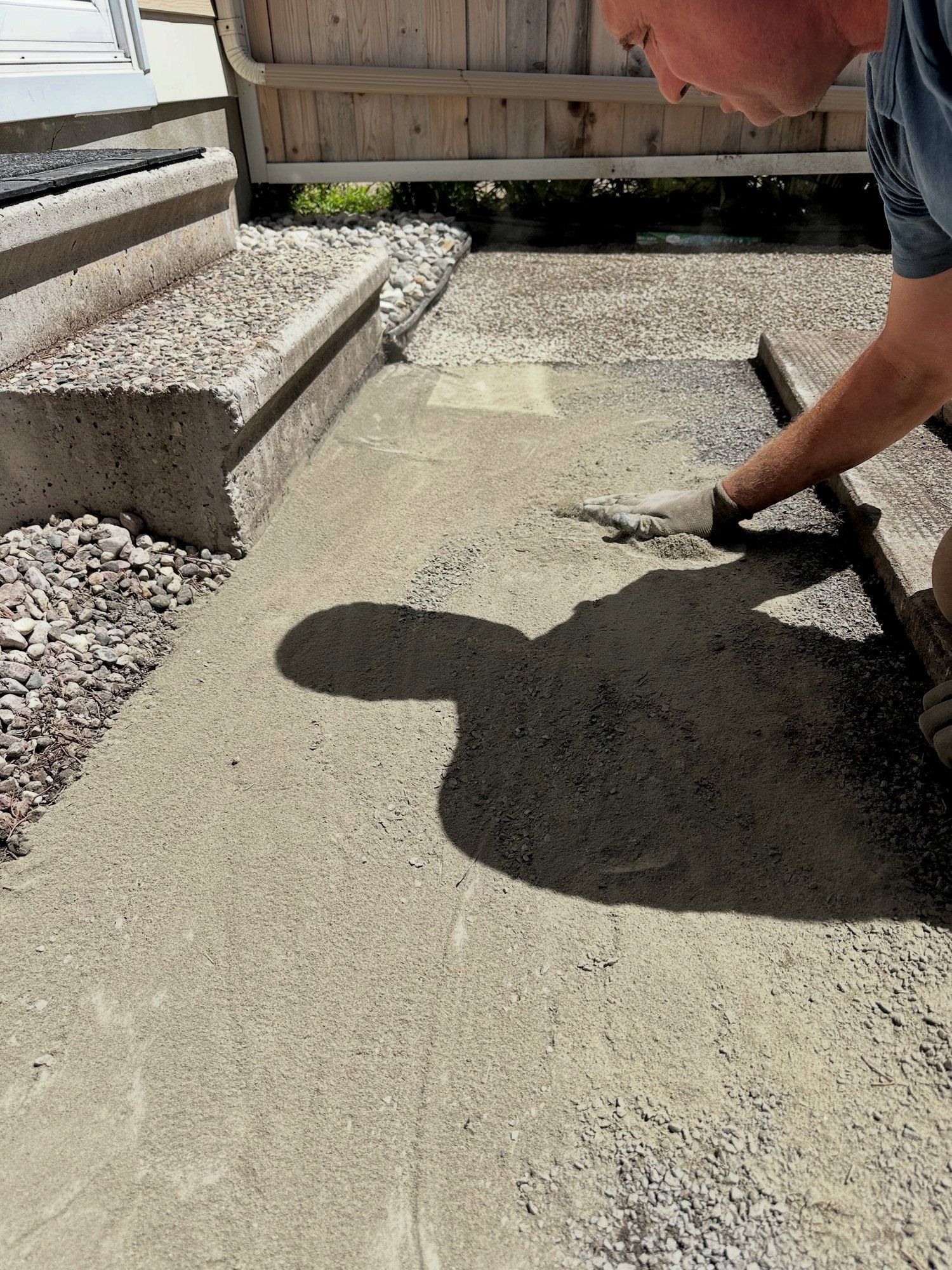
- New bedding layerScreeded flat so the relaid pavers meet the old surface at one level.Screeded flat
- Rebuilt basePlaced and compacted in layers where the soft, settled base was dug out.Placed in lifts
- Filter fabricKeeps the new base from working down into the soil below.Laid over the soil
- Native soilChecked once the old base is out: organic or wet ground is removed.To firm ground
What we build
Interlock repair: the work we take on
Sunken patio sections
A low area lifted with a margin of flat paving around it, the failed base replaced and compacted, and the same pavers relaid to meet the surface around them at one level.
Heaved pavers by the house
Pavers pushed up near the foundation or a downspout taken up, the wet base under them dug out, and the surface set back with its fall toward the yard.
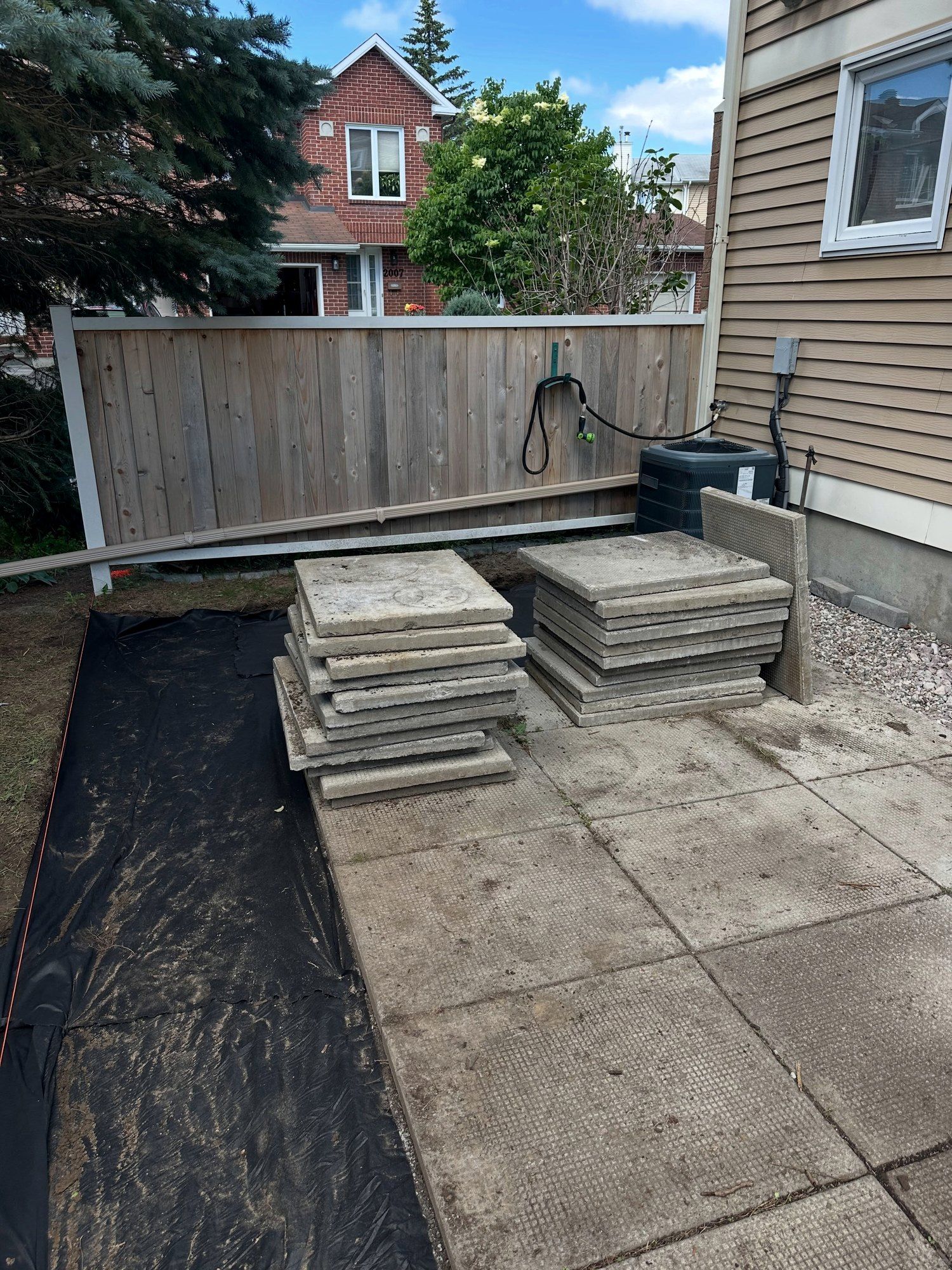
Slab patios relaid
Large concrete slabs that rock or tip lifted and stacked, the area dug out and covered with fabric, then the slabs relaid on one compacted base.
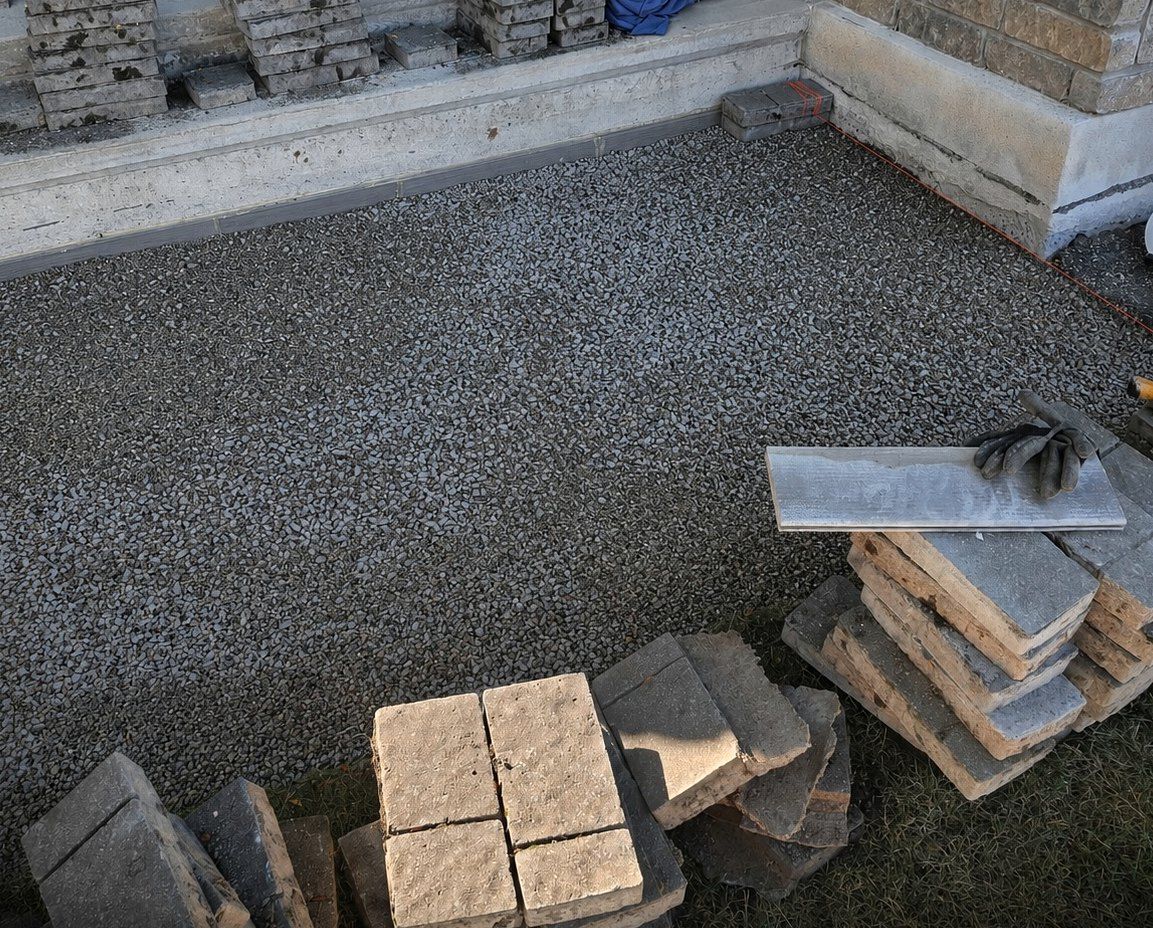
Front landings
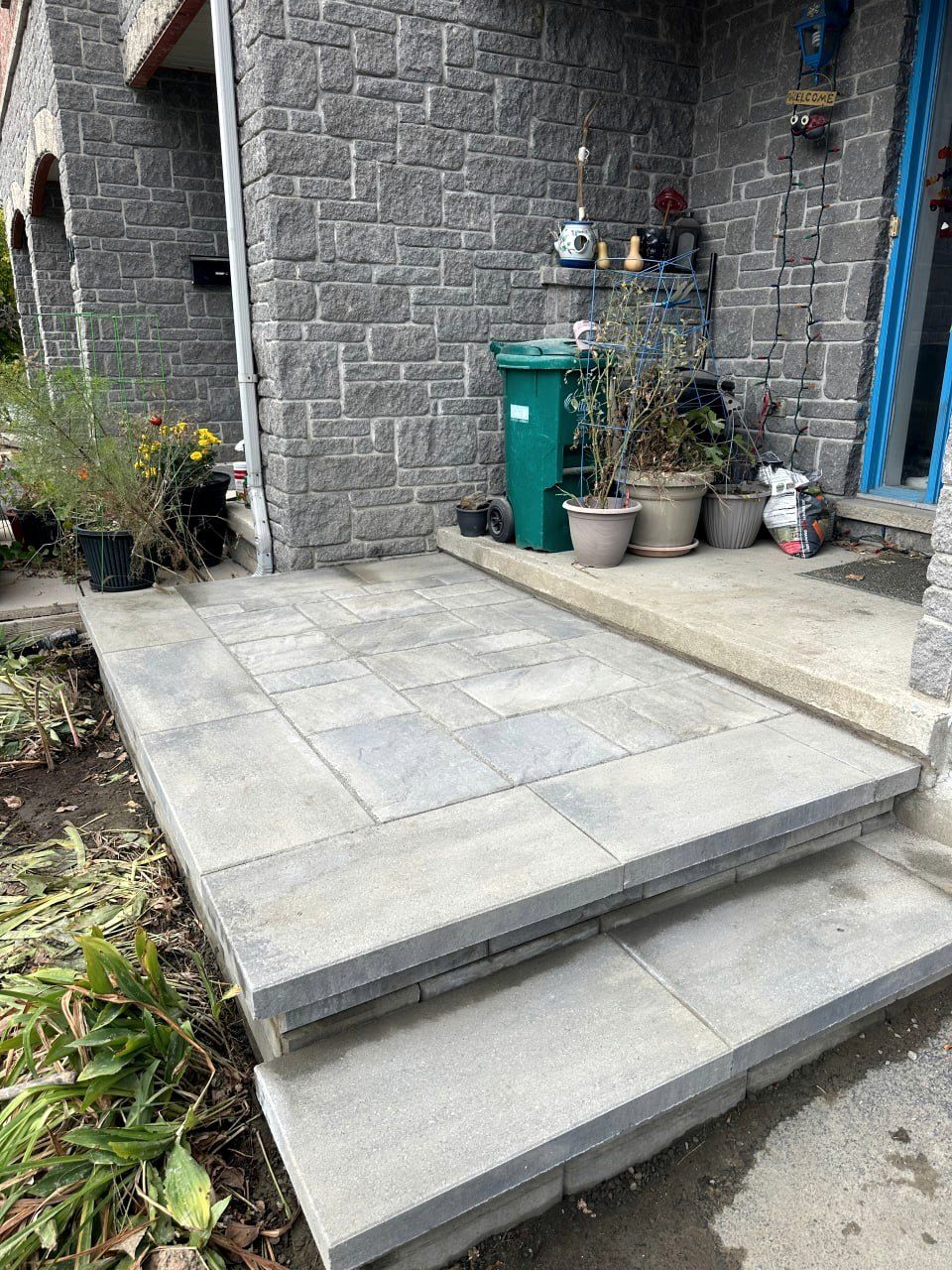
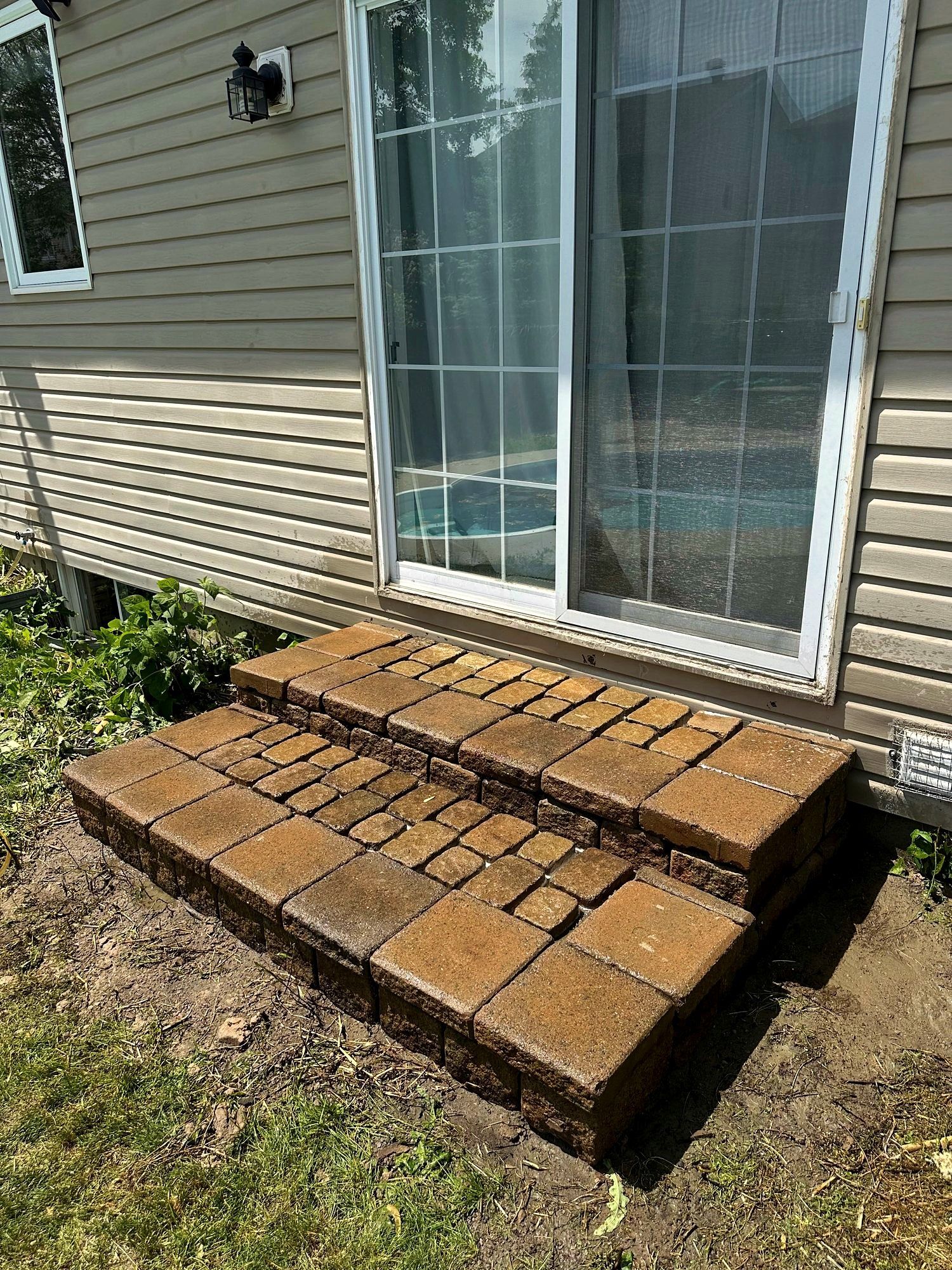
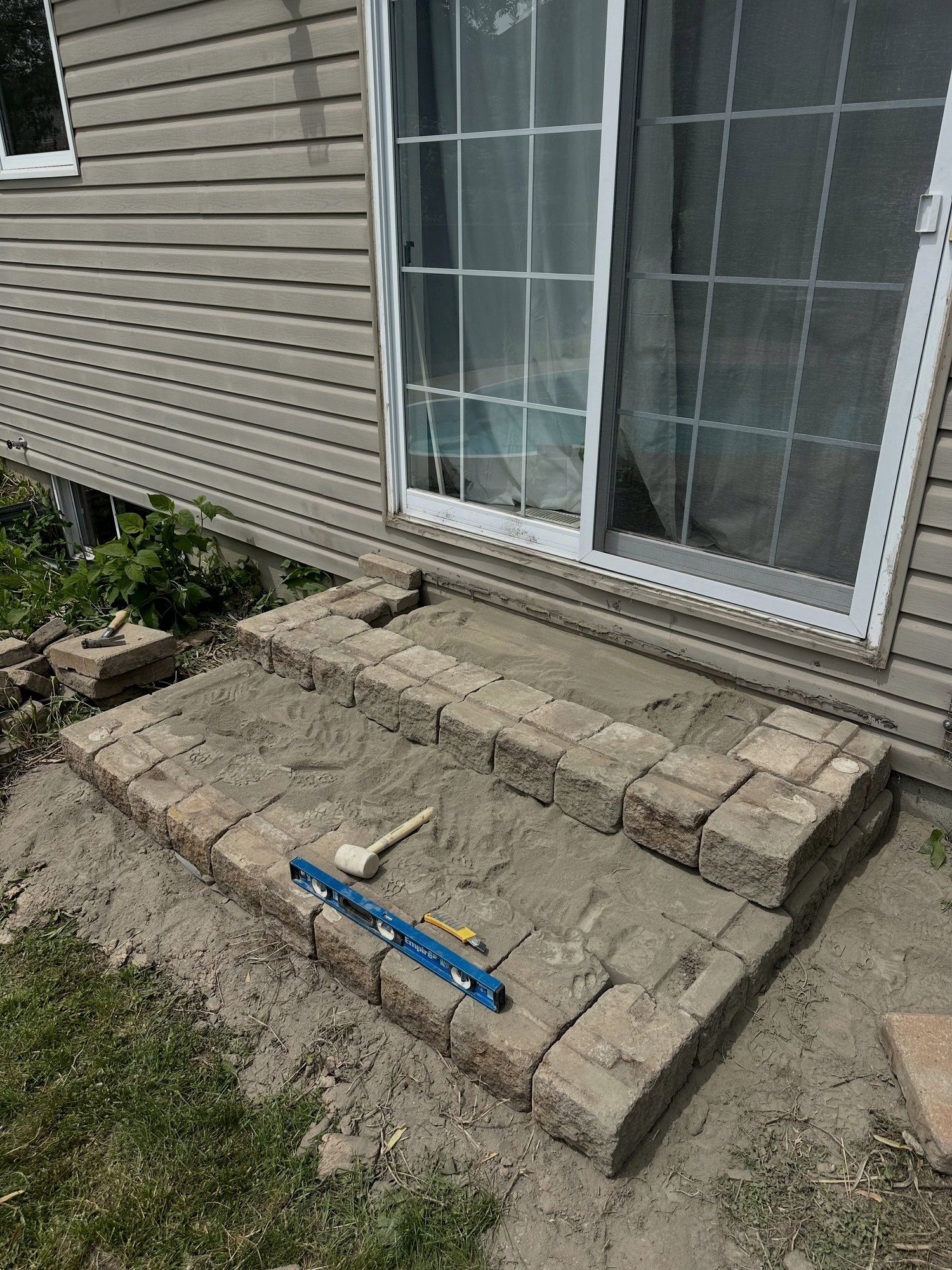
A settled landing in front of the door taken down to the soil, rebuilt on fabric and a levelled stone base, and finished with its pavers.
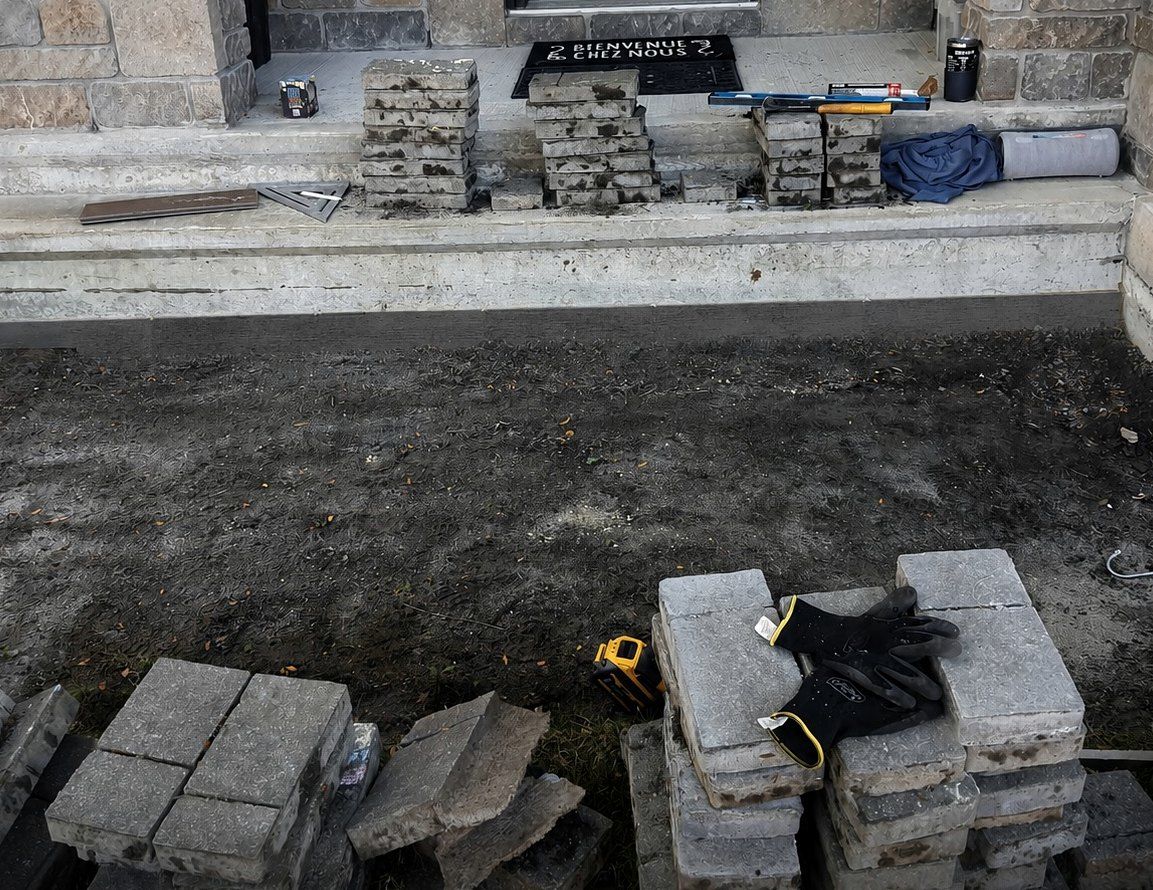
Reusing your pavers
Pavers without cracks or crumbling edges are lifted, cleaned of old sand and stacked to go back down, so the repaired area matches the rest of the yard.
Walkways and edges
Walkways that dip along the house and patio edges that have spread are relaid, with the edge held in place so the pavers stay tight and in line.
Patches over old trenches
Pavers lifted for a utility repair, a drain or a downspout line and put back on loose fill, rebuilt on a compacted base so the patch stops sinking below the surface around it.
Real projects
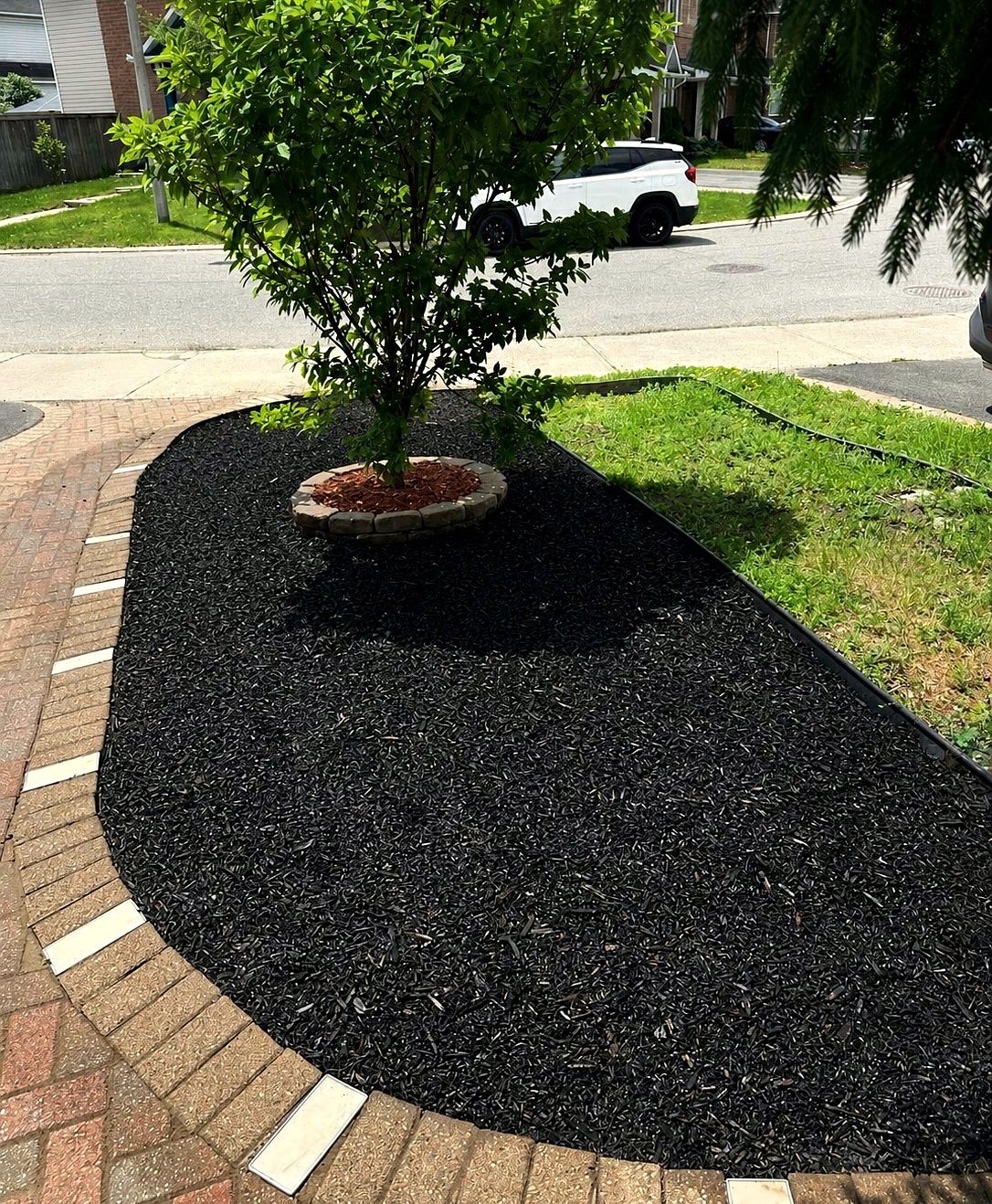
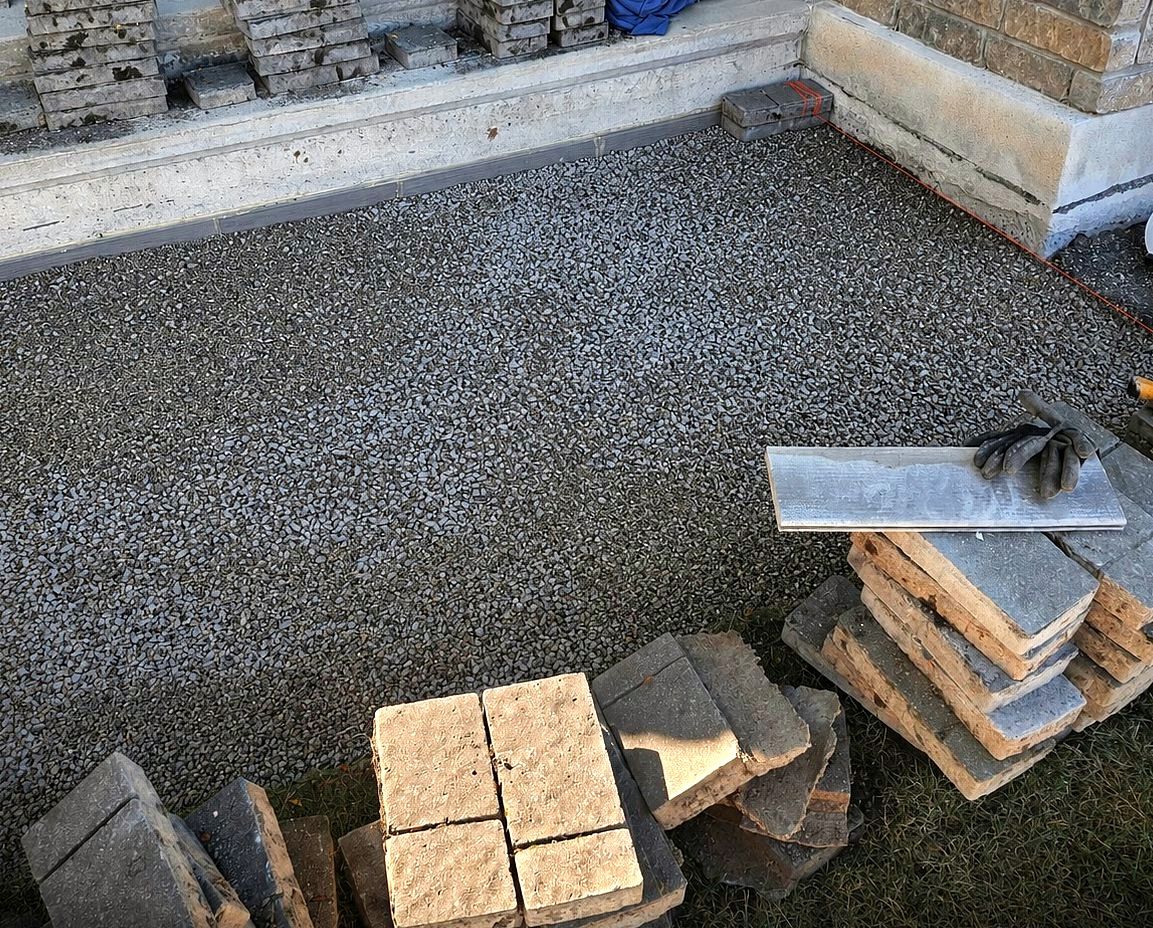
Interlock lifted and relaid
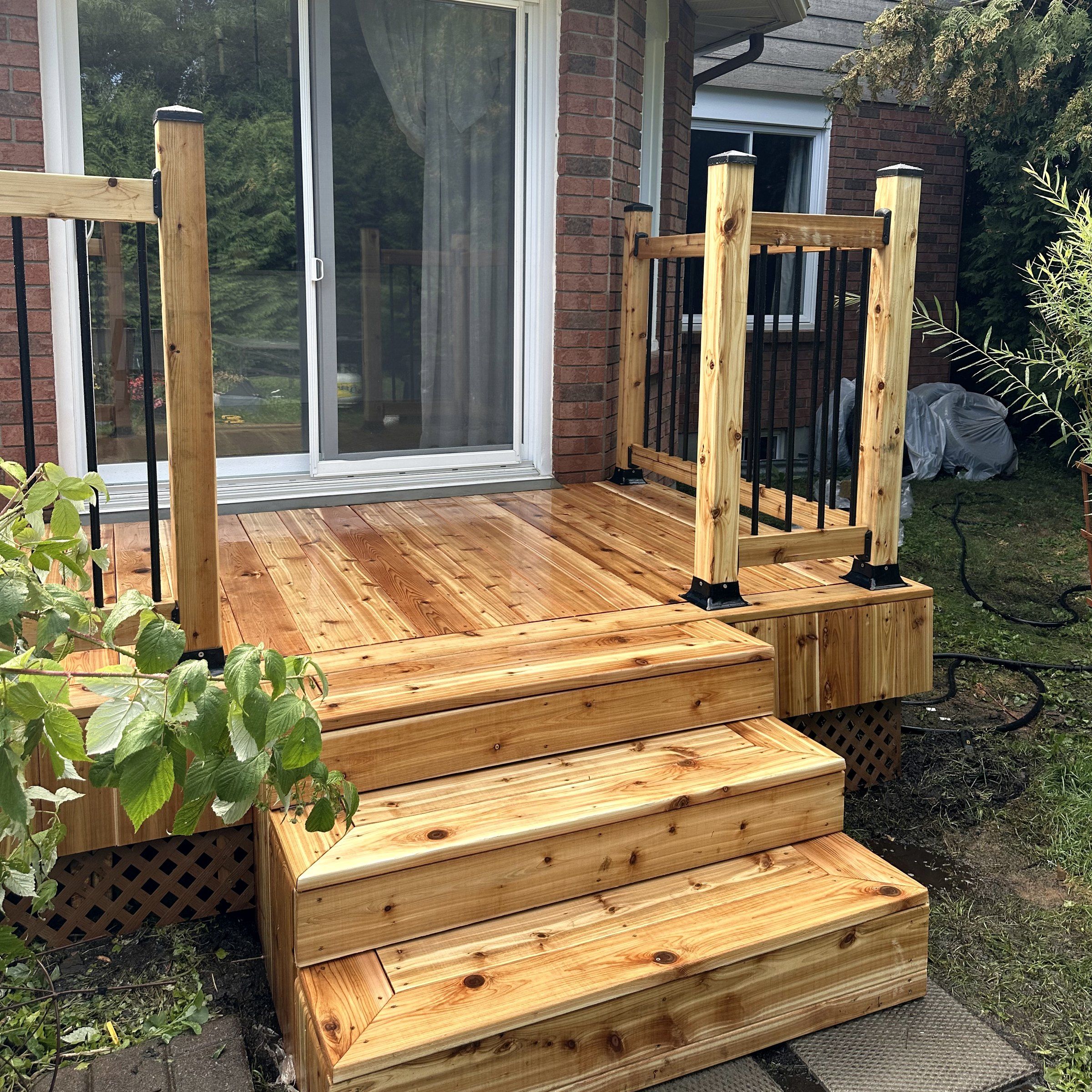
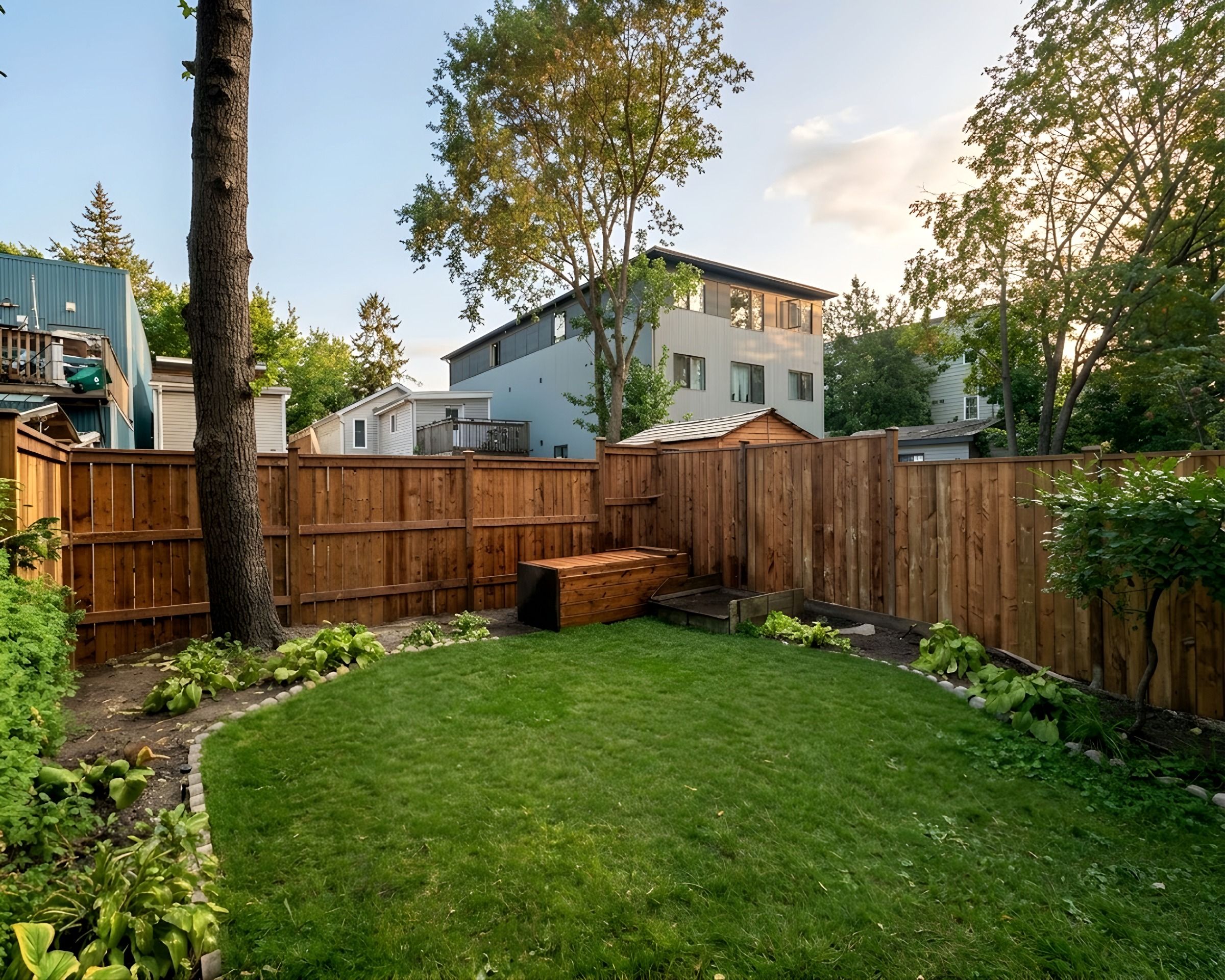
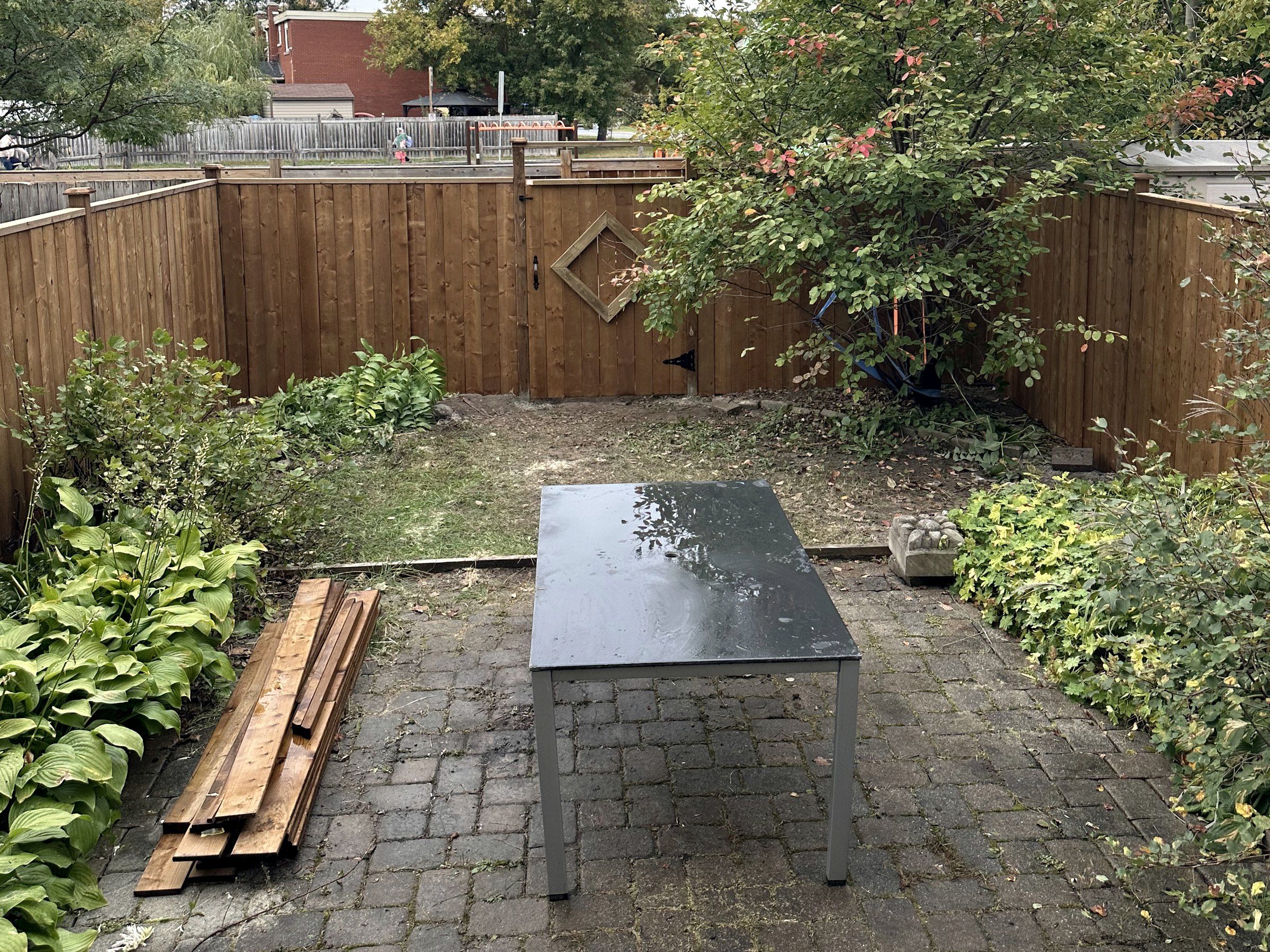
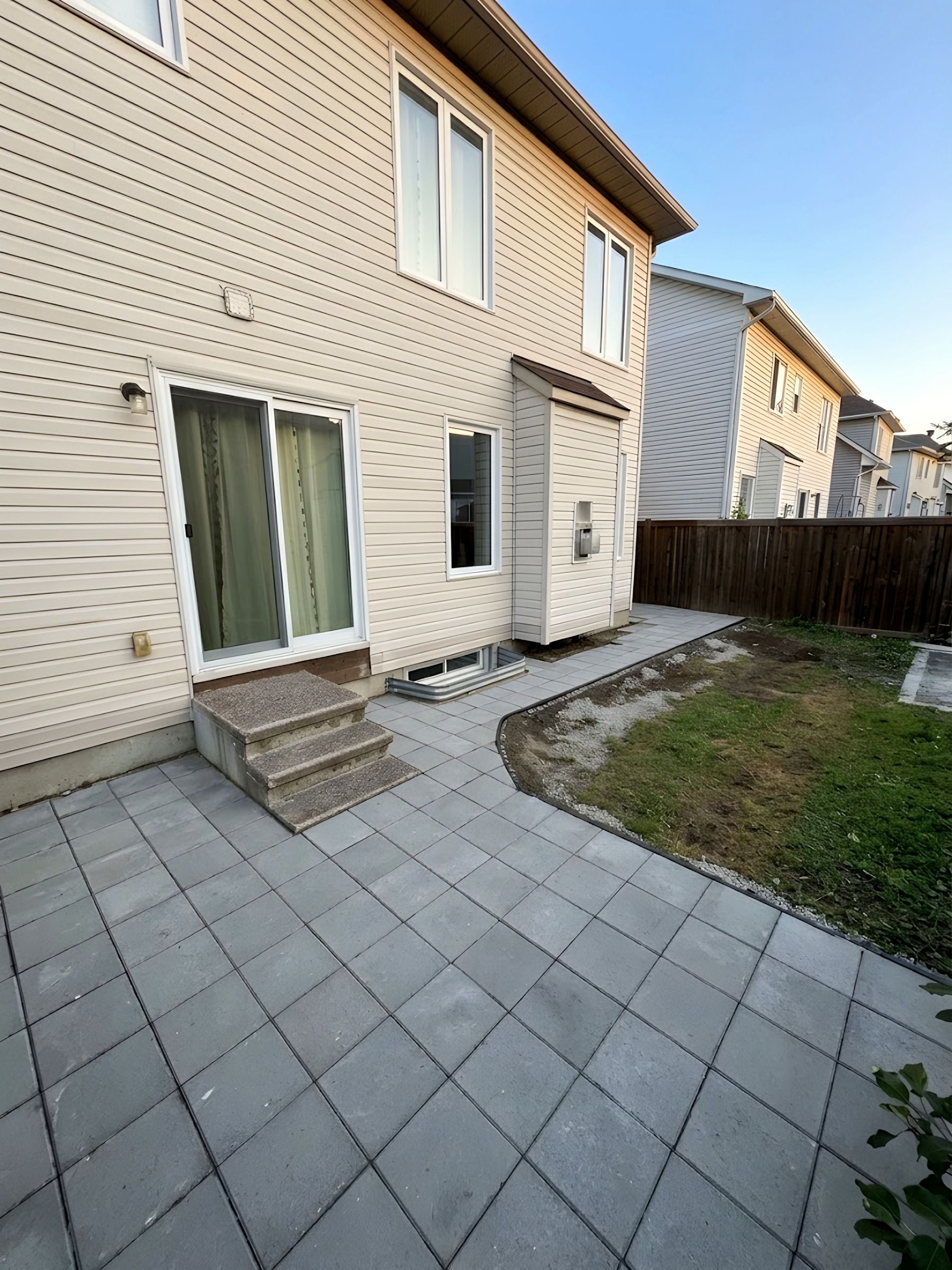
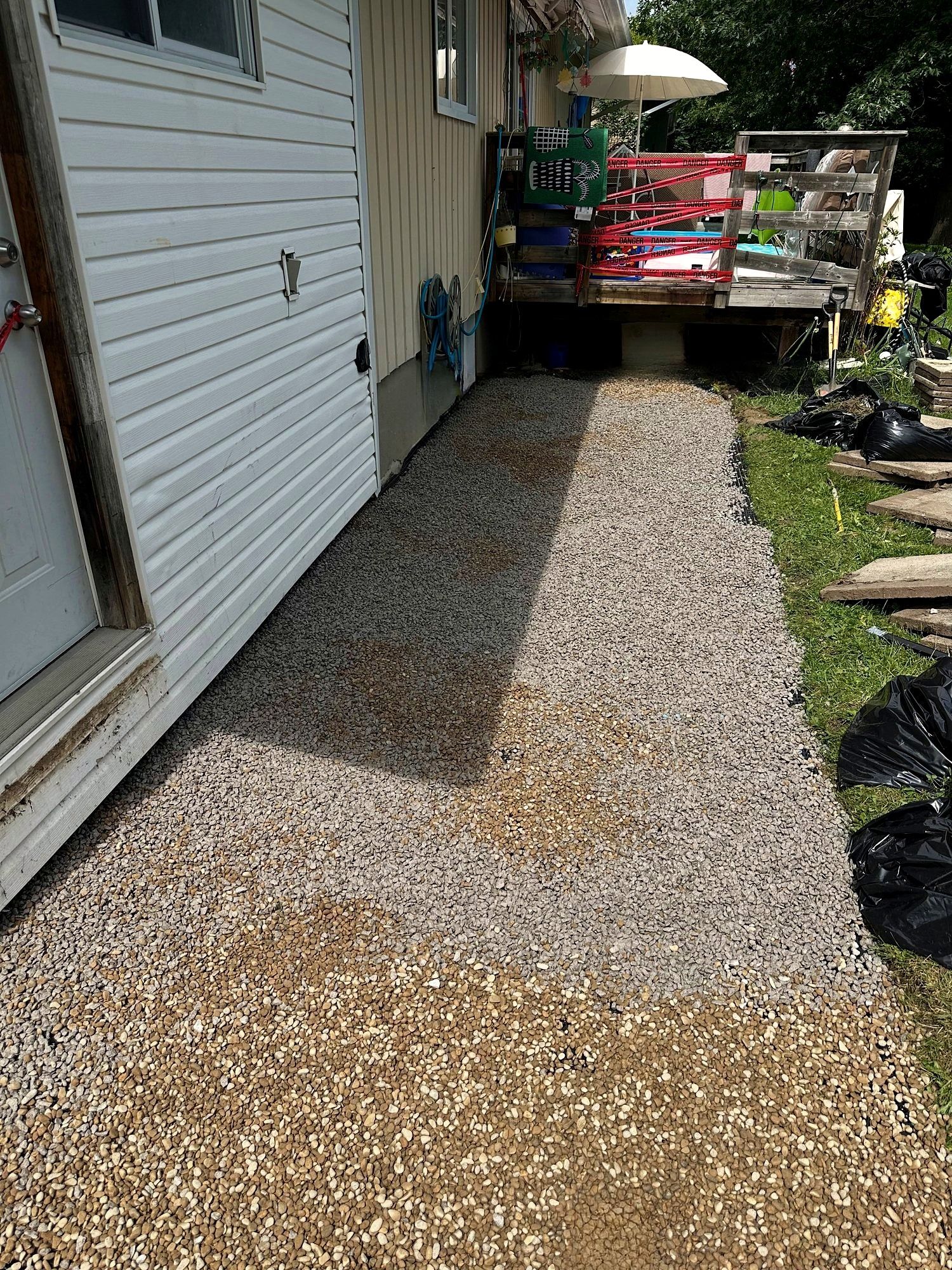
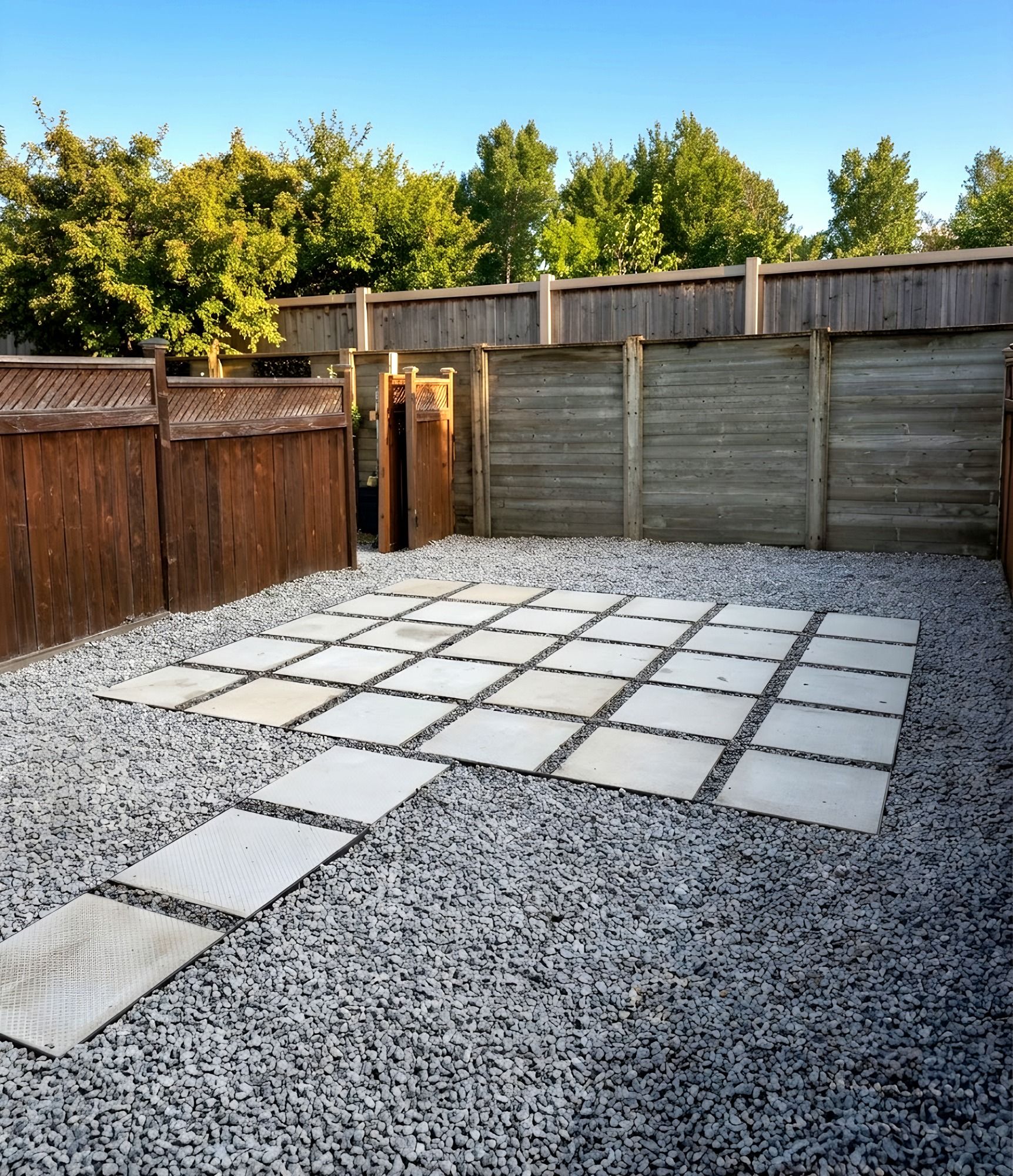
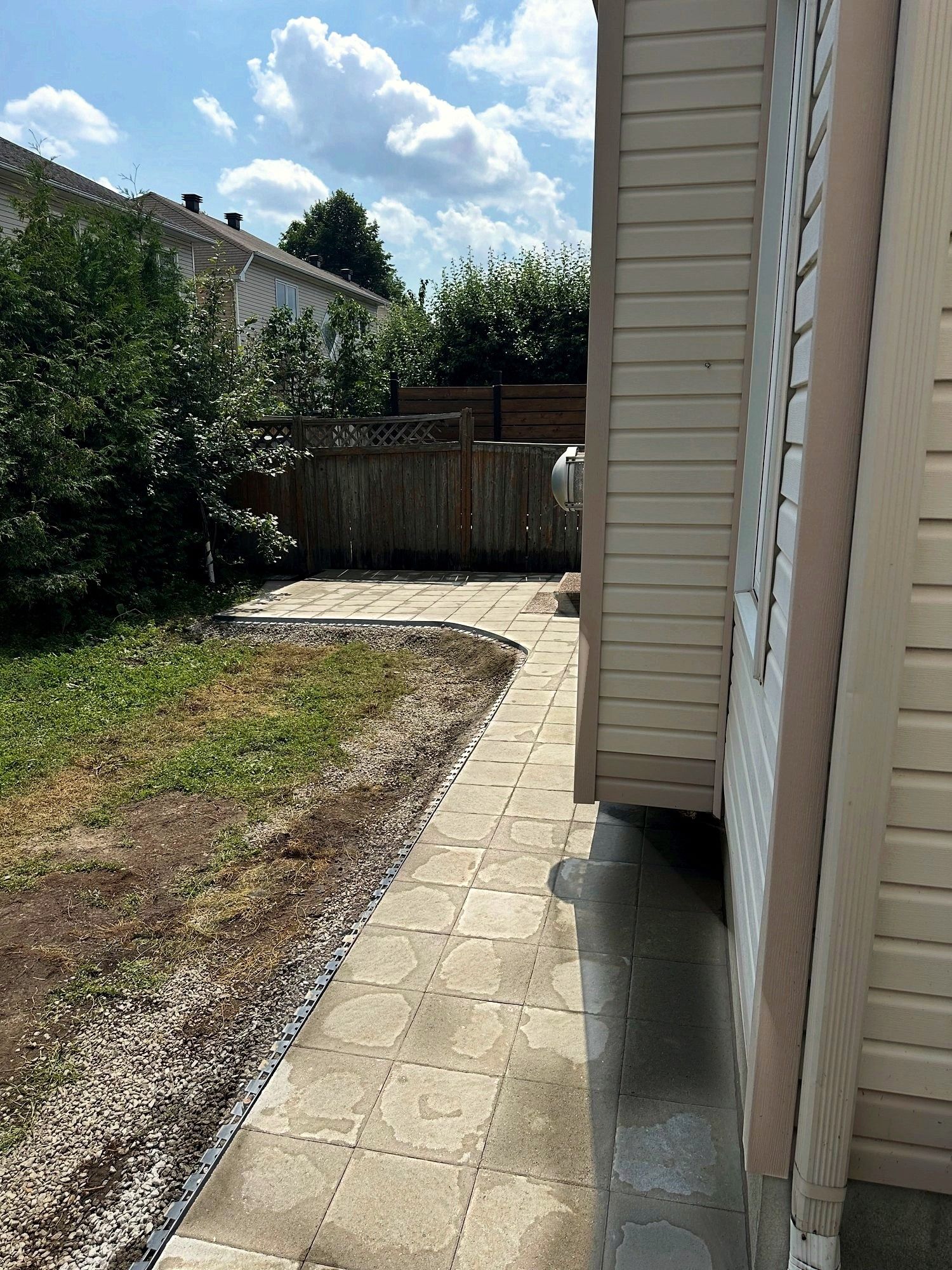
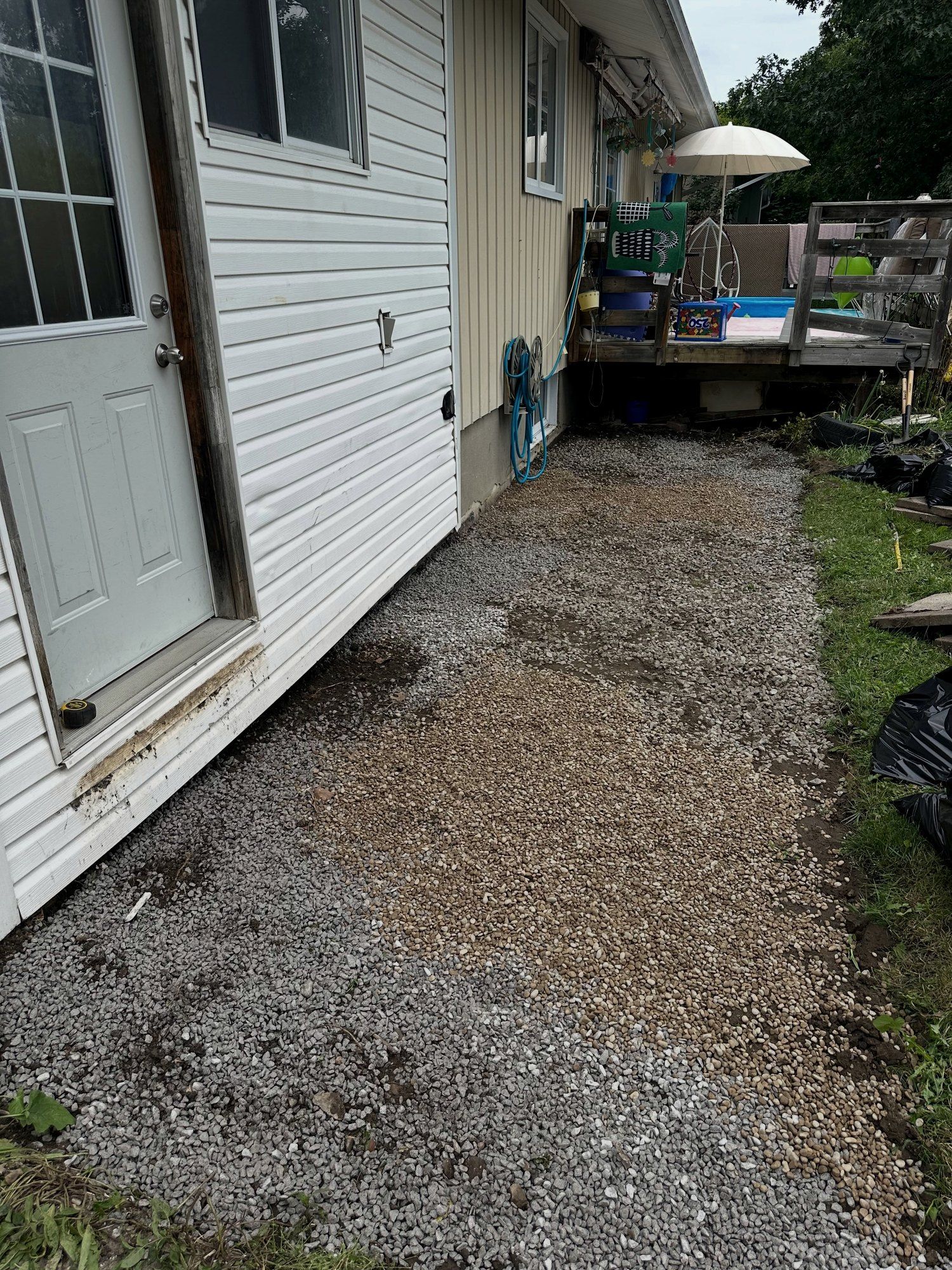
Two Korvex jobs where the old surface came up, the ground under it was rebuilt, and the stone went back down.
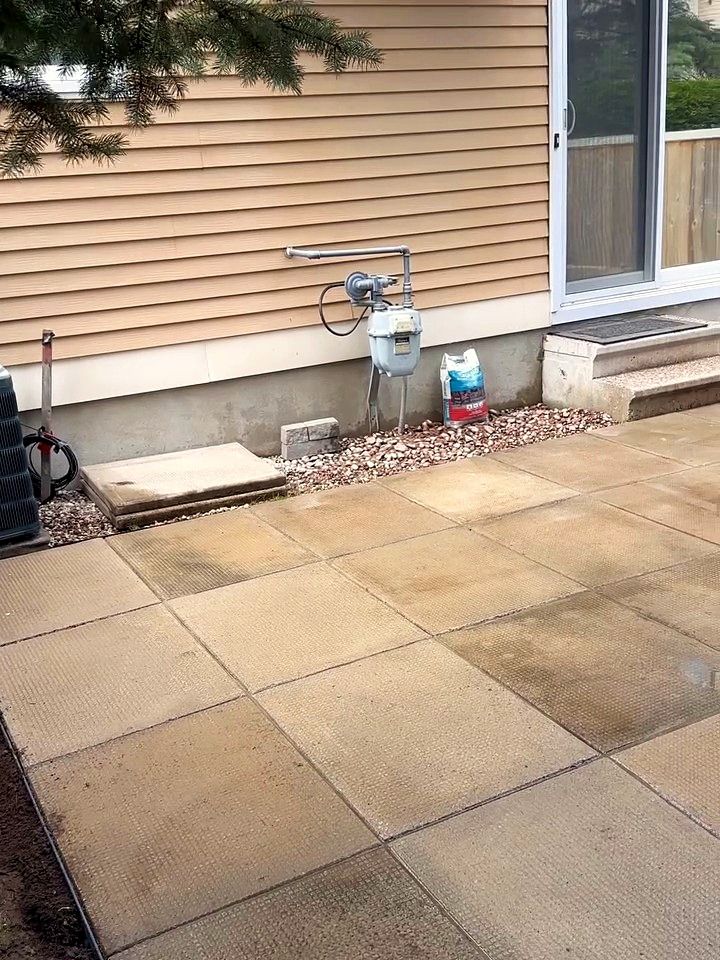
“Vlad and his crew installed my patio in 2 days. Did excellent work and vlad answered any and all questions I asked. I highly recommend Korvex Development for any job you may require.”
Joe Ayoub · Patio installed
“Did awesome work! had them repair a leany fence and they were on time, cheap and super professional”

Josh Cohen-Collier · Leaning fence repaired
Related services
Often built together
Service areas
Interlock repair across the Ottawa area
Soil, lot grading rules and house age change from one part of Ottawa to the next. Here is what that means for this work in each area.
On request: Gloucester, Carp, Richmond, Russell, Embrun. To check your street, call or text 613-880-7679.

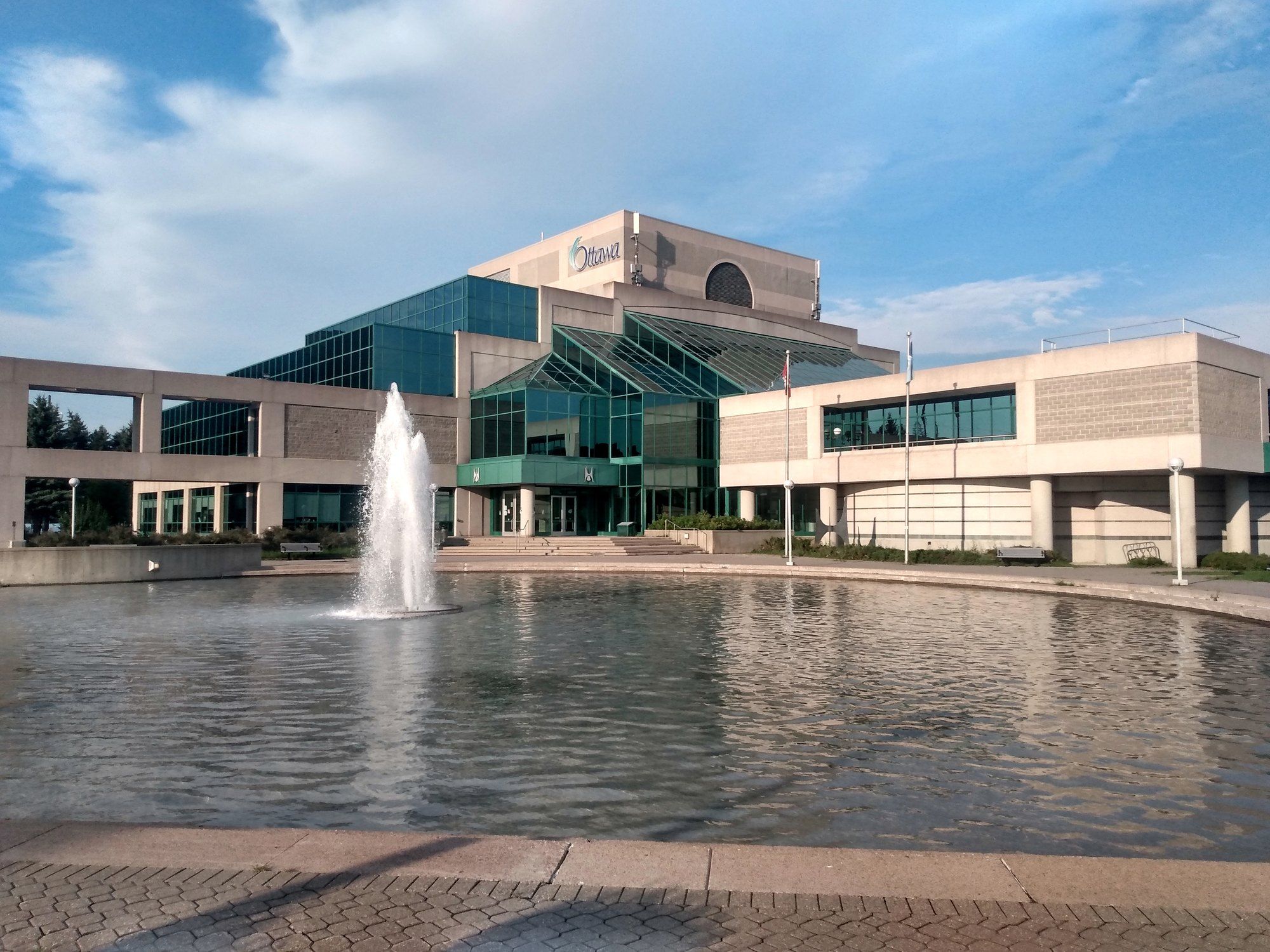
- OttawaClay under most of the city
Leda clay underlies most of Ottawa and is sensitive to water and disturbance. Excavation, compaction and a granular base are sized for that soil.
- NepeanPost-war lots
Qualicum-Graham Park was built in the 1960s on large lots, and Trend-Arlington was developed from the 1960s to the 1980s. Wider yards leave room for bigger decks and patios with a proper slope away from the house.
- OrleansYards from the 1970s boom
The first big wave of suburban streets went up in the 1970s, so the oldest yards are around fifty years old. Original patios, walls and fences there have been through many freeze and thaw cycles.
FAQ
What homeowners ask about interlock repair
Why did one part of my patio sink?
Because the ground under that part moved. The common causes are a base laid too thin or on topsoil, a base that was never compacted, backfill along the foundation that kept settling, and water from a downspout soaking the same spot every storm. Freezing water then works the pavers lower each winter. Korvex looks for the cause at the estimate, so the repair deals with it.
Can you repair only the sunken area instead of the whole patio?
Usually, yes. When the rest of the surface is flat and firm, we lift the low area plus a margin around it, rebuild the base there and relay the pavers to meet the old surface. When the whole patio has waves, rocks underfoot or drains toward the house, the base has failed across the job, and relaying all of it on a new base is the repair that lasts. We tell you which applies after looking at it.
Will my old pavers go back in?
Often, yes. Pavers and slabs without cracks or crumbling edges can be lifted, cleaned of old sand and relaid, which keeps the colour and pattern of your yard. Pavers that broke or spalled are set aside, and Korvex tells you at the estimate roughly how many new ones the repair would need.
Will adding sand to the joints fix the dip?
Joint sand locks the pavers to each other and keeps weeds down, and topping it up helps a surface that is still flat. A dip means the base below has moved, and sand swept into the joints leaves the pavers sitting where they sank. Weeds and open joints across a low area are often the first sign of a base problem, which is worth a look before it spreads.
Why do pavers heave next to my house or downspout?
Water reaches the base there and stays. When it freezes, it lifts the pavers, and in spring they drop back unevenly. City of Ottawa guidance says downspouts should discharge onto grass at least four feet from the foundation, never onto a neighbour’s yard or the sidewalk. Part of an interlock repair by the house is giving that water somewhere else to go.
When can interlock be repaired in Ottawa?
Base work needs ground that can be compacted, and frozen ground cannot be, so on most Ottawa sites interlock repairs run from spring to fall. A soaked base after heavy rain also waits to dry. The start date comes with the written quote, set around the season and your site.
Do I need a permit to repair interlock?
Landscaping is on the City of Ottawa list of projects that need no building permit, and relaying a patio or walkway falls under it. Two cases differ: a change to a driveway entrance where it crosses the City’s right of way needs an access permit, and steps or a landing at a door with more than 600 mm between surfaces need a building permit. Korvex checks your repair against both at the estimate.
How is an interlock repair priced?
By the area that has to come up, how deep the failed base goes, how many pavers can be reused and how easily the yard can be reached. Korvex Construction sees the patio, walkway or landing in person anywhere in Ottawa and the suburbs, and the written price follows that visit.

Book a free interlock repair estimate
Tell us what you want built and send a few photos. We come out, look at what sits under the job, and give you the scope and the price in writing.